Batteries are still not a continuous store of energy that frees us from the electricity grid. We have to take electric cars off the road to charge them. Moreover, storage batteries take far too long to recover after a power outage in our homes. The problem lies in battery chemistry, and controlling the heat that faster charging generates. However, there is breaking news of batteries getting closer to instant charging at Penn State University.
Batteries Getting Closer to Charging EV’s in Ten Minutes
Electric cars also take far too long to top up energy compared to gasoline. Moreover, electric filling stations are still a rare sight outside of city centers. As a result, most electric cars are actually hybrid, and hence still not fully on renewable power.
The grid itself is far from being off carbon too. This could only be possible with efficient batteries feeding wind and solar through. Batteries getting closer to almost instantaneous charging is therefore an important part of the solution. However, this involves importing large amount of energy very quickly. Unfortunately, this shortens lithium battery life because the some lithium plates the anode over instead of shuttling back to the cathode.
Charging at High Temperature Proves Sensible at Penn State
Traditional battery science holds over-heating batteries during charging is bad for them. This has stood in the way of batteries charging really fast until now. However, Chao-Yang Wang at Penn State University just turned that paradigm on its head.
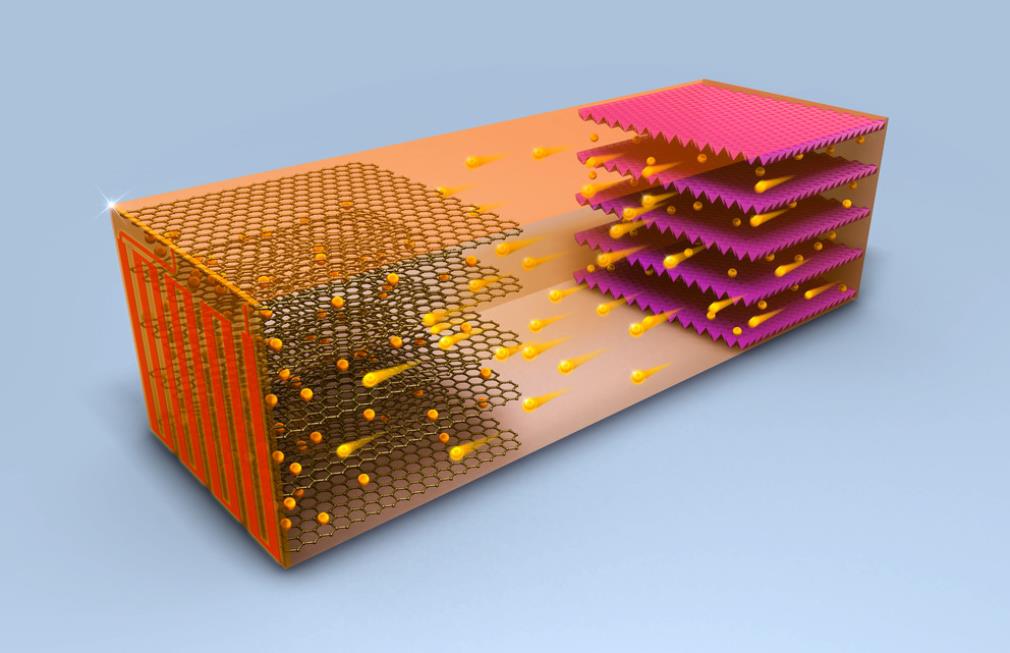
He layered stacked electrodes with micron-thick nickel foil to allow them to heat up real fast. Then he experimented with different temperatures to see which worked best. Heating the electrodes to 60°C produced the best result with no lithium plating after 2,500 cycles. So we have batteries getting closer to lasting 14 years, and powering electric cars for 450,000 miles.
This could enable electric vehicles to recharge batteries in 10 minutes according to New Scientist. However, Chao-Yang Wang and his team are not done yet. They are already talking of breaking the 5 minute barrier.
Related
Electric Auto Battery Charging in Six Minutes
Lithium Metal Battery Failure at Nano Level
Preview Image: Ten Minute Battery
Video Share Link: https://youtu.be/ppYGWnYgUrc