It would be akin to a dream come true if fully charging vehicles with home solar were possible. That’s because we could go completely off-grid, and shake the dust of second-degree carbon off our feet. World Economic Forum posted an article on progress in this regard. Moreover, they say we are getting tantalizingly closer to making this a reality.
Home Solar Vehicle Charging With Smart Technology
Energy Saving Trust examined the practicalities on the basis private electric vehicle owners seldom use their full battery capacity. Since most times they use them for daily commuting, taking kids to school, or going shopping. However, their report also makes use of research by Martin Raubal and colleagues into charging vehicles with home solar, we link to below.
Charging often happens at night, when grid charges are lower, and utilities are less interested in trading with home solar owners. World Economic Forum factored this in and reported as follows:
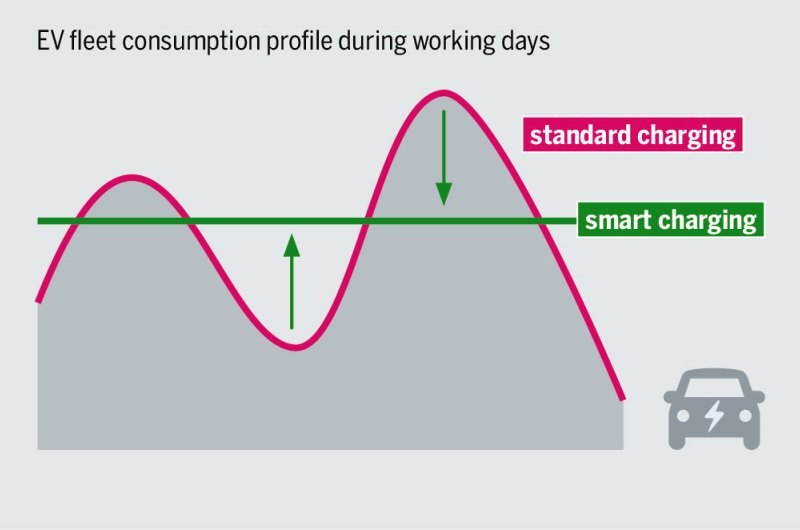
1… Firstly, charging mostly at night, as we typically do with the grid contributes 15% of energy requirements.
2… However, smart charging in interaction with the utility delivers 56% without the need for storage.
3… But if we buffered our solar power by going via battery storage, then we could drive almost entirely this way.
Smart Living In The Emerging Green Era
More and more of us are going to be working at home on computers, as machines take over our manual duties. We would need to change our nine-to-five working habit to make this green solution possible. Perhaps it’s time to ask ourselves why we spend all day working.
Our case study demonstrates the potential of smart charging, for a decentralized and grid-friendly supply of renewable energy has been exploited very little so far,” Martin Raubal observes. Vehicle-to-everything technology is drawing us closer to using solar and vehicles to achieve total energy independence.
Breaking News
Vacuuming Battery Minerals From The Sea Bed
Green Ultra-Fast Charging Electric Vehicle Trial
Preview Image: The Case for Smart Charging
World Economic Forum Smart Charging Analysis