Lavender plants contain the highest concentration of natural linalool oil, although we also find the substance in several other plants. Linalool is popular in soaps, fragrances and other commercial products, thanks to its pleasant scent with a touch of spiciness. Max Planck Institute has found a way to improve sodium-sulfur batteries with lavender oil, and it could be a winner.
Sodium-Sulfur Batteries With Lavender Have Potential
Our transition to renewables would not be possible, without our ability to store green energy. Batteries are one workable solution, but their raw materials should be renewable too. The competition is on between lithium-ion and sodium-sulfur chemistry, but the jury is still out:
- Sodium sulfur’s raw materials are easier to obtain than lithium-ion’s cobalt and lithium.
- Mining these relatively rare metals damages the environment and causes social disruption.
- But sodium-sulfur chemistry stores less energy, and has a shorter life span than lithium-ion.
Who could have thought it possible to improve sodium-sulfur batteries with lavender oil?
Narrowing the Sulfur Gap With Linalool Lavender Oil
Sodium-sulfur battery storage capacity drops away significantly after a few charging-discharging cycles. The Max Planck Institute team already knew this deterioration was mainly due to ‘sulfur shuttling’.
This phenomenon occurs after polysulfides form at the cathode electrode. These sulfides then migrate across to the anode electrode, and react with it. This process continues until the sodium-sulfur battery ultimately fails.
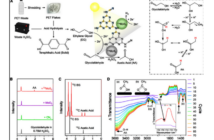
Lead researcher Evgeny Senokos found a way to stop this destructive process, ‘by locking the polysulfides in a carbon cage’. Linalool and sulfur formed a nanostructured material, whose nanopores were around 100,000 times narrower than a human hair, and trapped the bulky polysulfides.
“We create a stable and dense nanomaterial from linalool and sulfur,” Senekos explains. “And thus obtain batteries that are more durable, and have a higher energy density than today’s sodium-sulfur batteries.
“The prototype batteries retained more than 80 percent of their original charging capacity after 1500 charging and discharging cycles. It’s fascinating to design future batteries with something that grows in our gardens.”
More Information
A New Sodium-Ion Era Dawns at Argonne