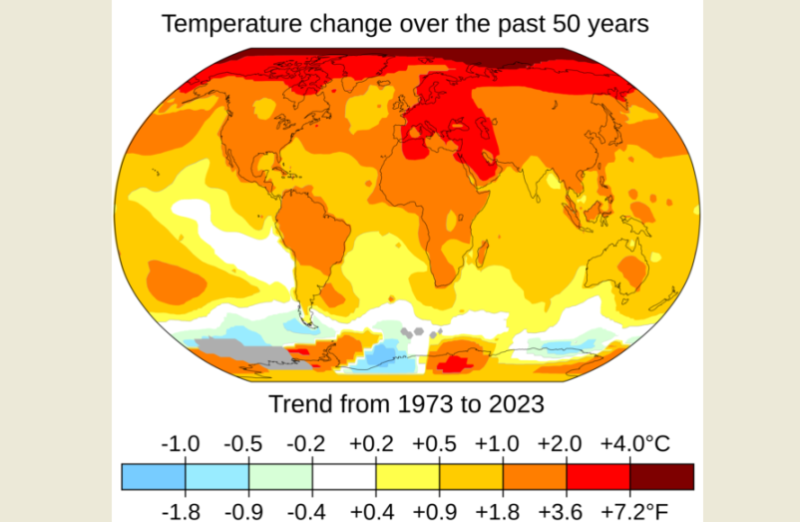
The United Nations Framework Convention on Climate Change, introduced a series of conferences among participating nations in 1994. Member nations meet annually for a Conference of Parties (COP) to assess progress in dealing with climate change. This regularly includes a call to boost battery storage to support more renewable energy.
2024 COP President Calls for More Battery Storage
The COP presidency rotates to a different member nation every year. The presiding country for the 29th COP is the Republic of Azerbaijan, on the boundary between Eastern Europe and Asia. As is customary, their leader has announced 14 climate change initiatives for the conference to focus on.
Climate Change News confirms that one of these 24 initiatives will include a call to boost battery storage to six times the 2022 level, by 2030. This would be a massive step change in a situation where some major weather events appear to be becoming more extreme.
Renewable energy is the internationally preferred way to counter the major drivers behind global warming. That’s because wind and solar power replace oil and gas power generation, that add carbon to Earth’s atmosphere.
Storage Proposal By the Republic of Azerbaijan
The Republic of Azerbaijan is asking the 2024 COP conference to agree to increase global energy storage capacity six times above 2022 levels, reaching 1,500 gigawatts by 2030. Such a step would require over 50 million miles of new or improved supply lines within the same time period.
This call to boost battery storage will mainly depend on batteries. However, this is not entirely a new initiative. The Republic of Azerbaijan adds impetus to COP 28’s agreement to triple renewable energy capacity by 2030, while maintaining energy security.
This decision seems definitely achievable, given that the energy industry is already moving fast along the same lines. In fact, the proposed 1,500 gigawatts is only 100 gigawatts greater than the current trend line.
The International Energy Association believes the 1,500 gigawatts will bring us close to limiting average global warming to +1.5º C, in terms of its Net Zero Emissions goal.
More Information
Batteries and Climate Change Mitigation