The Channel Tunnel connects England and France along a 31-mile route beneath the English Channel. Safety is paramount, and so everything down there is electric. Passengers, vehicles and their occupants travel in comfort on electric passenger trains, freight trains, and vehicle shuttle services. On January 23, 2026, the BBC brought news of eHGVs cleared for channel tunnels too.
eHeavy Goods Vehicles Accepted For Channel Service
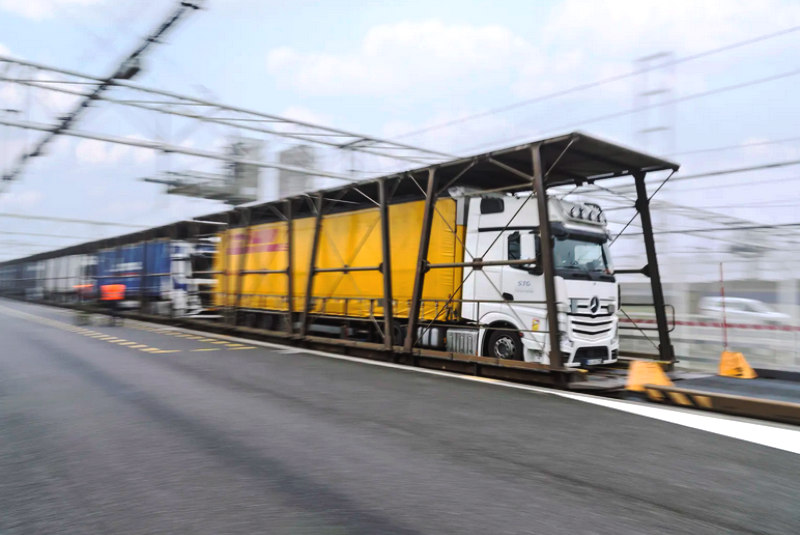
The first electric heavy goods vehicle (eHGV) has finally made the Channel crossing on a vehicle shuttle service. Approval has been a while in the pipeline, but this is now finally official.
The BBC news channel sees this as proof positive, of government and industry commitment to slash greenhouse gas emissions in the industry:
- eHeavy goods vehicles previously had to cross the Channel between England and France on surface diesel ferries.
- This meant they could not use the tunnel service, but with eHGVs cleared for channel tunnels, that is changing.
However, full commercial implementation will only roll out later this year. This is a frustrating, but understandable delay in the interests of battery safety. The initial uptake may be minimal. Although the tunnel commercial strategy director anticipates 50,000 eHGV crossings by 2030.
It’s a Matter of Planning Channel Tunnel Crossings
The pioneering eheavy goods vehicle crossing began in the UK East Midlands, and reached its destination in Germany with a 12-ton load. Its driving range was 300 miles-per-charge.
The driver recharged the batteries fully overnight, with regular top ups during breaks. “You just have to plan your journey accordingly,” Adrian Szewczyk told BBC News.
A leading electric truck manufacturer concedes that electric truck purchase prices are more than conventional alternatives, although their operating costs compensate for this over five years. With eHGVs cleared for channel tunnels finally, isn’t it time to increase the number of suitable charging stations?
More Information
Electric Truck Batteries in Canada