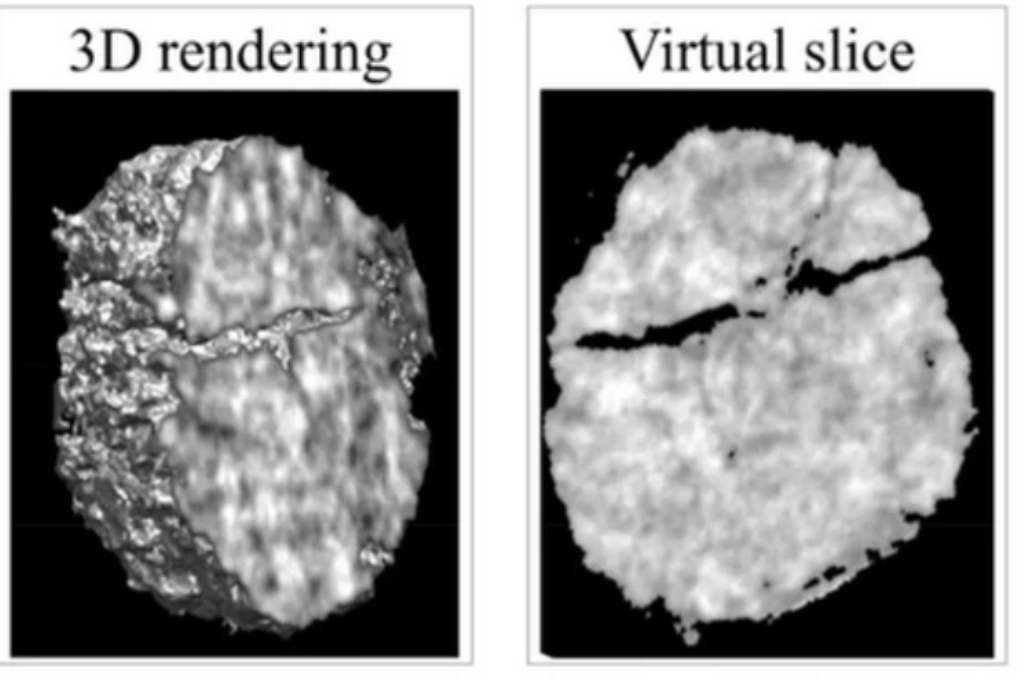
Scientists led by an assistant professor of mechanical engineering at Purdue University in Indiana confirmed what we have been pondering for a while. That’s because Kenzie Zhao and his team claim to have found the reason why faster charging batteries degrade sooner. They used artificial intelligence and imaging techniques to create the most detailed photos of batteries ever. They were able to find the evidence they needed at particle level.
Building Working Models of Faster Charging Batteries
First, Kenzie Zhao and his team built small cells of various kinds ranging from phone to watch batteries. Then they tested them at various charging speeds to obtain the most detailed photographs of batteries in history.
They claim to have discovered faster charging batteries with greater capacity degrades their reliability faster. This is especially evident in batteries with thicker electrodes designed to accept charge more rapidly. Tom’s Guide explains how “particles near the separation between cathode and anode fail more quickly than particles far away.” This is due to active lithium ions shuffling between them.
Revealing a Battery is a Mechanical System
“Most people regard batteries as an electrochemical system rather than mechanical system,” Kenzie Zhao says. “But in fact, a battery is a mechanical system that deforms hugely between cycles.” This phenomenon is one of the major issues behind faster charging batteries degrading more rapidly.
His research team used a transmission x-ray microscope all the way down to a five micrometer level. This enabled them to watch cracks developing on individual particles during fast charging. They say fixing this problem is up to battery manufacturers.
They merely wanted to create images that explained how the degradation occurs, and how it affects the performance of batteries. After manufacturers examine their data. they can start thinking of solutions, they say.
Related
Fast L-Ion Charging Under a Microscopic Eye
Batteries Stressing Smartphones and Us Too
Preview Image: Individual Particle Fracture