Pyotr Leonidovich (Peter) Kapitza was a leading Soviet physicist and Nobel laureate, born in Kronstadt, just west of Saint Petersburg on July 8, 1894. He was most famous for his work in ultra-strong magnetic fields, and low temperature physics. But he also had time to invent the first bipolar battery in 1928, for the elegant reason he needed a special storage medium for his research.
Kapitza’s Plans for His First Bipolar Battery
Kapitza explained in his patent application how he needed a special battery for three distinct purposes:
- Store and release very high electric power for very brief moments.
- Use this to generate very high density, momentary magnetic fields.
- Have a device at his disposal capable of achieving these two goals.
The application continued by explaining how the invention primarily comprised a ‘flash discharge’ accumulator. And how Kapitza adapted the standard design so its terminals short circuited repeatedly, without damaging the structure.
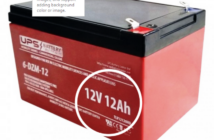
The battery we show in the image above, comprised 71 plates of chemically pure lead, 35 cm (13.75 in) square and 1.5 mm (0.6 in) thick. These were arranged in a single pile, and separated by u-shaped rubber washers around their edges to keep them apart. The lower half of the gap between the plates contained a 25% solution of sulfuric acid.
How Well Did This Invention Work in Practice?
The first bipolar battery, Kapitza explained, comprised a number of bipolar electrodes with alternating charges. This design insured low resistance both in the electrodes, and in the electrolyte. Four of the batteries joined in parallel delivered over 1,000 kilowatts with 0.2 ohms resistance after ‘brief charging’.
Finally, the inventor observes there was little force of attraction, or repulsion between adjoining electrodes. He believed the reason was the current did not pass in parallel planes between adjoining plates. And thereby the risk of buckling or rupture was reduced to a minimum, ensuring the device could tolerate regular use,
More Information
Bipolar Batteries Could Chart a Fresh Future
Battery Evolution, Do You Want to Know Why?