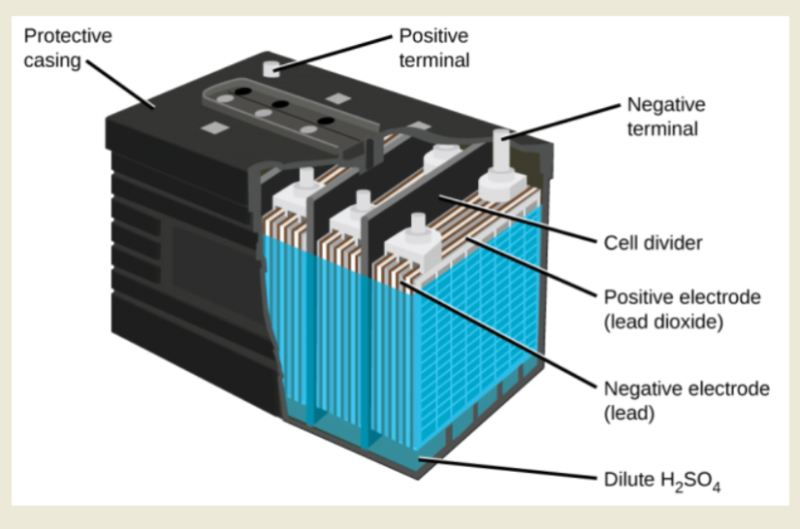
There are two types of lead acid batteries freely available throughout the world. These alternatives have similar chemistries, although their designs vary. The basics are the same though. They have similar lead plates to what Gaston Planté designed in 1859, and their electrolyte is still dilute sulfuric acid. Let’s dive in and discover more now.
The Two Main Types of Lead Acid Batteries
The two main types of lead acid batteries are starter batteries, and deep cycle versions. But there’s a sideshow before we start. Either type may be vented, or sealed. All our lead batteries are deep cycle, sealed ones. We do not supply starter batteries. Ours are smaller ones for personal devices like golf carts UPS systems etc.
STARTER BATTERIES
Starter batteries deliver more intense current to turn over vehicle engines. They do this by delivering a powerful thrust of energy to the starter motor. This is why they go flat quite soon, if we do this over-and-over on a cold winter morning.
DEEP CYCLE BATTERIES
Deep cycle lead acid batteries, which are the second type we describe here, have a different type of job to do. They deliver a steady supply of continuous power to stair lifts, tennis ball machines and so on.
HOW THESE DIFFERENCES MATTER
We strongly advise against using deep cycle batteries for starter motors, and vice versa. A sprinter will not do well in a marathon race, nor a long-distance runner in a 100-meter sprint.
Mechanical Differences between Starter and Deep Cycle Batteries
Starter batteries have very low internal resistance, because they use multiple, thin lead plates. The ‘sponge lead’ applied over them allows quick charging, and fast recharging while driving the vehicle.
The difference between these two types of lead acid batteries becomes evident when we turn our attention to deep cycle ones. These have fewer, thicker lead plates that can deliver energy far longer.
However, we should not allow them to run completely flat, because this can reduce their future endurance. All batteries perform best when we use them correctly in appropriate devices.
More Information
Extend Starter Battery Life With These Tips