

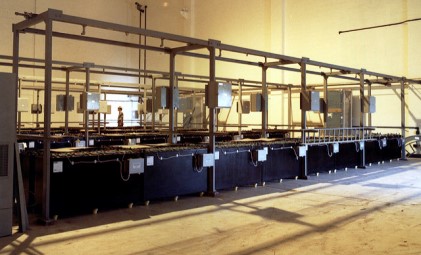
Digital Journal issued a press release on 15 August 2017. This confirmed the lead-acid battery market is secure for the visible future due to to reasons we outline here. The Journal ascribes lead acid success to a unique selling proposition of ‘reliability, relatively low maintenance cost, and durability’. We dedicate this post to summarizing global lead-acid battery trends as revealed by Digital Journal.
Composition and Market Scope of Lead-Acid Batteries

Current global lead-acid battery trends indicate annual market value will reach US$58.5 billion by 2020. But this assumes a compound annual growth rate of 4.6%. Lead-acid chemistry is the oldest technology in the battery business, with the automotive industry one of the largest users.
The lead-acid battery market serves the commercial, grid storage, motive industrial, stationary industrial, transport, and residential sectors. Stationary industrial and transportation account for 77.9% of the total.

Stationery industrial includes back-up power generation, DC power plants, substations, and transmission distribution. This is the fastest growing sector because it has a forecast compound annual growth rate of 8.6%. Global lead acid-battery trends for grid storage will come next with 7.3%, although the market is still relatively tiny.
Asia continues to dominate the lead-acid battery market with 34.2% share, followed by North America (21.6%) and Europe (18.7%). However, Eastern Europe appears likely to catch up gradually, having the highest regional compound annual growth rate of 5.5%.
Global Lead-Acid Battery Trends Post Petrol / Diesel Era
We can only guess, but we suspect electrification of vehicles may have less effect than we first thought. Because grid storage may take up the slack, before the 2040 Franco-British petrol / diesel deadline that other nations may well follow.
Current technology suggests electric and hybrid cars will still power their accessories off lead-acid batteries, including lighting and HVAC systems. Thus, if we are merely replacing automotive power sources, then current global lead-acid battery trends could continue unabated.
Related
Enduring Nature of Lead-Acid Batteries
Lead-Acid Batteries Keep Rolling On
Preview Image: Lead-Acid Battery Storage


