Would you like to know how a lithium-ion battery overheats and potentially catches fire? Well, it’s an accepted fact that something causes it to overheat, although we may not realise it at the time.
Why It Matters If a Lithium-Ion Battery Overheats
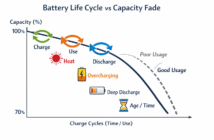
Lithium-ion battery fires usually begin with internal overheating. This sharp temperature rise may be due to an internal short circuit, physical damage, manufacturing defects, overcharging, or excessive heat. We should not ignore these warning signs.
This Situation Can Lead to More Than Overheating
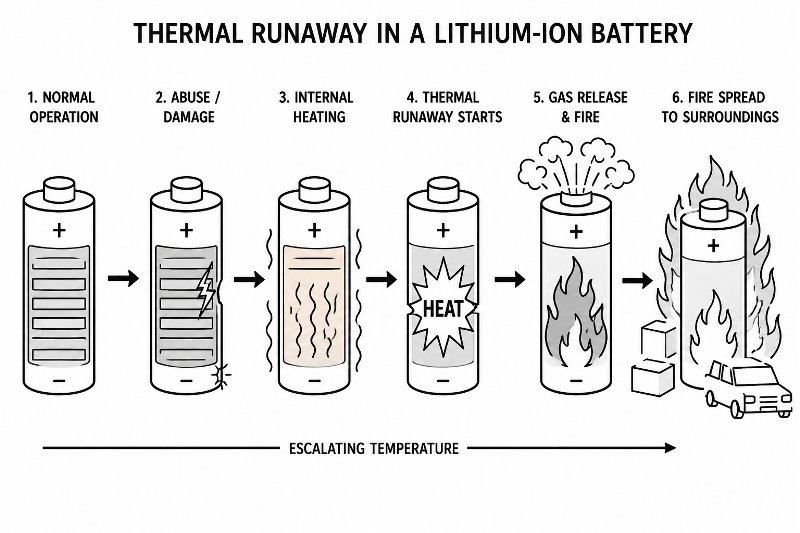
It’s not only how a lithium-ion battery overheats that matters. This situation may trigger a process called ‘thermal runaway’. This is a self-sustaining chain reaction. One overheating battery cell releases heat, flammable gases, and energy that may overheat neighboring cells.
What Happens Inside a Hot Lithium-Ion Battery
If the chemistry uses a metal oxide cathode, then that material begins to decompose. It can release oxygen from its metal oxide structure, intensifying combustion within the cell.
There are several types of lithium-ion batteries. Their cathode materials behave differently during thermal runaway. Some release more oxygen than others. It may be difficult to identify the battery chemistry, especially during an emergency.
Thermal Runaway in Overheated Lithium-Ion Batteries
To recap, one of the cells inside the battery may enter thermal runaway. Its cathode electrode may start to disintegrate and release its oxygen from its oxide material. This intensifies combustion inside the battery, and accelerates thermal runaway to other cells.
Try To Avoid Getting Yourself Into This Situation
Lithium-ion battery fires are difficult to control because thermal runaway generates its own heat, oxygen and flammable gases. Prevention is better than cure. Physical damage, manufacturing defects, overcharging, or excessive heat may be the root cause. Try your best to avoid them all.
More Information From Our Blog