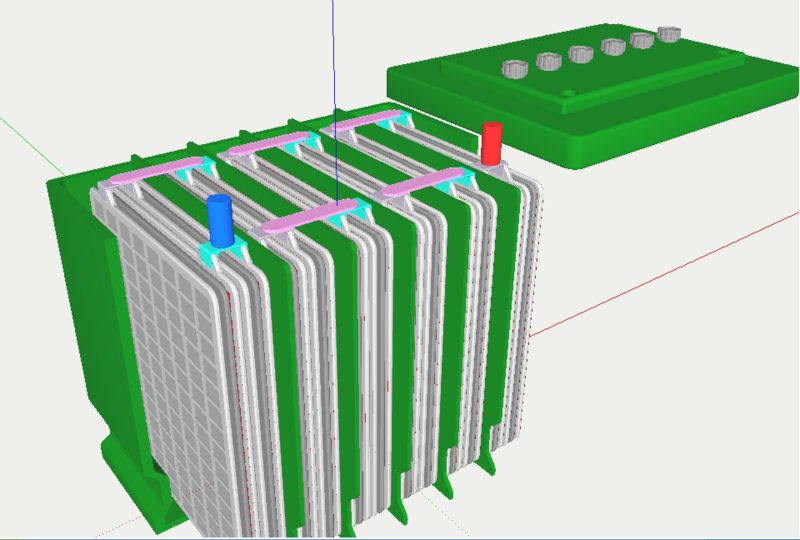
The success of the lead-acid battery depended on mass manufacture, more than good chemistry. In a nutshell, this was how how lead-acid batteries became easier to manufacture. From Skilled Hand Work To Efficient Factory Manufacturing
As demand grew, manufacturers transformed battery production from skilled hand work into efficient factory manufacturing. This was a crucial stage helping explain how lead-acid batteries became easier to mass produce in volumes.
One of the first improvements was casting. Early lead grids were made by hand using simple molds, and quality varied from one plate to another. Better casting machines produced grids with accurate shapes, uniform thickness and fewer defects.
Machines Applied Lead Oxide Paste Evenly To Every Plate
Camille Alphonse Faure had shown that coating lead grids with a paste of lead oxide greatly increased battery capacity. Manufacturers developed machines that applied this paste evenly to every plate. Consistent pasting improved battery performance and reduced manufacturing time.
After pasting came curing in carefully controlled rooms, where temperature and humidity allowed the active material to harden, and bond firmly to the grid. Proper curing produced stronger plates that were less likely to lose material during use.
Factories Introduced Mechanical Handling And Assembly
Factories also introduced mechanical handling and automated assembly. Machines could cast grids, apply paste, stack plates, insert separators and assemble battery cells much faster than manual labor. Standardized sizes made batteries easier to install and replace in vehicles.
Quality Control Became Another Important Step
Quality control became another important step. Manufacturers tested materials, monitored curing conditions, and inspected finished batteries before they left the factory.
These manufacturing improvements lowered costs while improving reliability. They produced lead-acid batteries in enormous numbers for cars, trucks, industrial equipment and backup power systems.
Today’s Manufacturing Methods Are Far More Precise
Modern lead-acid batteries still use the same basic chemistry, but today’s manufacturing methods are far more precise than those used by the earliest battery makers.
More Information From Our Blog