Battery self discharge is the result of an autonomous chemical reaction. This drains an electrical charge in the absence of a connection between electrodes, or an external circuit. This phenomenon reduces the power available when a consumer purchases a battery, or does not use it for while.
Self Discharge Is Ongoing in An Idle Battery
A battery continues to naturally drain energy, whether on a shelf or in an idle device. This means the charge will not last as long as it should, when a user decides to draw on its power. However, the actual rate of battery self-discharge depends on several factors.
The best we can do is slow the rate at which this involuntary event occurs. Tutor Chase confirms the secret is storing batteries properly. Since high temperatures accelerate the process, it will slow down in a cool dry place, they say.
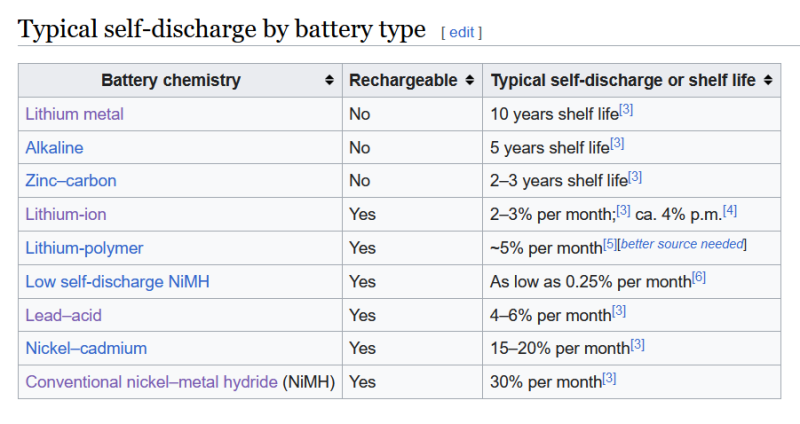
Factors influencing the rate of discharge include the battery chemistry type, the initial state of charge, and the ambient temperature surrounding it. Primary, single-use batteries generally lose their charge more slowly than rechargeable ones. This is essential, because they may remain unsold in retail stores for some time.
Managing the Effect of Spurious Battery Discharge
The ambient, outside temperature plays an important role here. This is because all chemical reactions – including self-discharging – occur more rapidly at higher temperatures.Therefore, all batteries hold their charges longer if kept in cooler environments.
Batteries also auto-discharge when their terminals accidentally connect via another conductive material. The rate can be slow or fast depending on the resistance of the conductor. We can avoid this by insulating both terminals of batteries in storage, or wrapping them in plastic or paper.
Despite all these efforts, batteries do eventually discharge beyond their useful level. We therefore ought to purchase single-use batteries with long sell-by-dates. And we should recharge the secondary ones in our phones and laptops regularly, according to the manufacturer’s instructions.
More Information
Getting Battery Auto-Discharge Taped