This is a second article in a short series in which we compare batteries and capacitors. We do so in the light of gathering artificial intelligence presenting greater challenges. This article is a critique of the battery storage solution that has brought us thus far. Are we approaching the top of the curve?
Is the Battery Storage Solution Running Out of Steam?
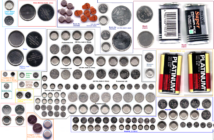
Batteries come in a wide variety of shapes and sizes. The challenge has always been to pack more capacity into less space. But there has been a contra movement of consumers demanding cheaper batteries. And as a result, many small batteries still sell without capability to recharge.
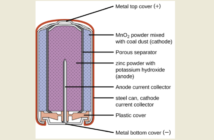
Battery essentials have hardly changed over a century and a half. Scientists may tweak the details, but they still have electrons, ions, anodes, cathodes, and electrolyte. There are only so many ways to improve the current battery storage solution. However, most of this work involves substituting materials.
Are Gadgets Running Out of Room for Batteries?
A mere twenty years ago we were still designing gadgets around batteries. That’s why flashlights had long, tubular handles, and why portable radios were so bulky. Maybe it is time to move on from that analogue world. Perhaps we need a more compact way to store personal portable energy?
One possible view of the future is robots will do most of the physical work. And that this will require a level of intelligence relying on advanced electronics. Batteries certainly will provide most of their energy. However, smaller robots may not have space for batteries.
And so the race continues towards greatest energy density, in the smallest possible space. This in turn demands longer battery life, with fewer recharges and replacements. Meanwhile capacitors are improving in leaps and bounds. While some believe the battery storage solution could be approaching top of its curve.
Breaking News
Let’s Compare Batteries and Capacitors