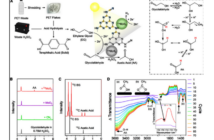
Triphenylphosphine oxide is a common, but potentially useful waste by-product of organic synthesis, for example when converting alcohols to alkyl chlorides. Researchers have found a way to use this industrial waste for energy storage in flow batteries, instead of costly metals. This could become a useful contribution to the green transition from carbon-intensive, metal-based energy storage solutions.
Breakthrough For Energy Storage Using Industrial Waste
The Northwestern University announcement that we link to below, details how the researchers used industrial waste for energy storage in a flow battery. Their report also claims that this is the first time that a waste molecule has been used for this purpose.
“Battery research has traditionally been dominated by engineers and materials scientists,” says Northwestern chemist and lead author Christian Malapit. “Synthetic chemists can contribute to the field by molecularly engineering an organic waste product, into an energy-storing molecule.
“Our discovery showcases the potential of transforming waste compounds into valuable resources. This offers a sustainable pathway for innovation in battery technology,” the Northwestern Weinberg College of Arts and Sciences assistant professor adds.
The redox flow battery the researchers used for their experiment, had two tanks filled with active chemicals. These tanks, called the anolyte and the catholyte, functioned similarly to battery anodes and cathodes. In other words, they exchanged ions through a separator that kept the active liquids physically apart.
Triphenylphosphine Oxide Is Abundantly Available
Industrial processes generate thousands of tons of triphenylphosphine oxide annually, for example during some vitamin manufacture. This could definitely come in handy, if predictions of flow battery proliferation come true.
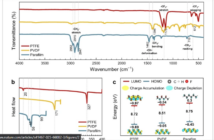
“Not only can an organic molecule be used, but it can also achieve high-energy density – getting closer to its metal-based competitors – along with high stability,”
“These two parameters are traditionally challenging to optimize together,” according to Emily Mahoney, the paper’s first author continues. “So being able to show this for a molecule that is waste-derived, is particularly exciting.”
More Information
Flow Battery Alternatives to Peaking Stations
Membrane-Free Flow Battery ‘Revolution’