Lithium-titanate batteries have quite a pedigree from the past. Or should we say a reputation. The Titans of mythologogy possessed unbelievable strength capable of lifting the earth to the sky. Well we did say imagination!
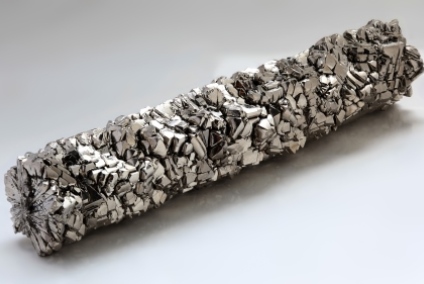
By the same token the astronomer James Herschel named Saturn’s largest moon Titan. Titan has stable bodies of liquid under a dense atmosphere, which is interesting. Getting closer to the topic, titanium is a lustrous, silvery, lightweight metal with a high strength-to-weight ratio.
What Exactly Is Lithium-Titanate

The chemical name for lithium-titanate is Li2TiO3. Uniquely, this formula confirms it is a compound containing lithium and titanium, with a splash of oxygen.
We are done with dusting off our chemistry schoolbook. You could discover more about lithium-titanate here.
The compound’s primary use is as an anode in rechargeable lithium-titanate batteries. In the first place, compared to lithium-li the anode is no longer carbon. The product also recharges much faster. As a result, large TOSA electricity buses are partly recharging batteries in 15 seconds while passengers are getting off and on. On the downside, the product has lower capacity.
Can I Put a Lithium Titanate Battery in My Smart Phone?

It follows that Li2TiO3 batteries are generally unsuited to consumer goods. This is on account of the smaller amount of energy they store. Seiko automatic quartz watches are an exception. The company is using the batteries to store power instead of capacitors.
More importantly we find lithium titanate technology increasingly in electric vehicle batteries. Examples include the Honda EV-neo bike, and the Mitsubishi i-MiEV car. Altairnano, Leclanché, Toshiba, Seiko, and Yabo are all producing rechargeable lithium-titanate storage batteries. These are for a variety of electric vehicles. In time, we hope to see more of them in consumer electronics and wearables. Right now, the ‘Titans’ are mainly making bigger batteries
Related