Renewable battery storage may be a virtual time machine,although we have not quite thought that way before. The technology makes it possible to use energy created NOW, in the FUTURE. No power station we know could ever do that on its own. But we are running ahead of ourselves again. How would this location-shifting renewable energy work in practice?
How Would Location-Shifting Renewable Energy Pan Out?
Paul de Lespinasse is professor emeritus of political science, and computer science at Adrian College in Michigan. He received his Ph.D. from John Hopkins University in 1966, and has been a National Merit Scholar, an NDEA Fellow, a Woodrow Wilson Fellow and a Fellow in Law and Political Science at the Harvard Law School.
The prof concedes that we already have time-shifting battery storage. But this is in the sense of a grid can releasing energy stored during the day, in the same network at night. However, this usefulness plummets when we realize we can’t store summer energy for winter as efficiently. No battery energy storage system can store electricity for as long as that!
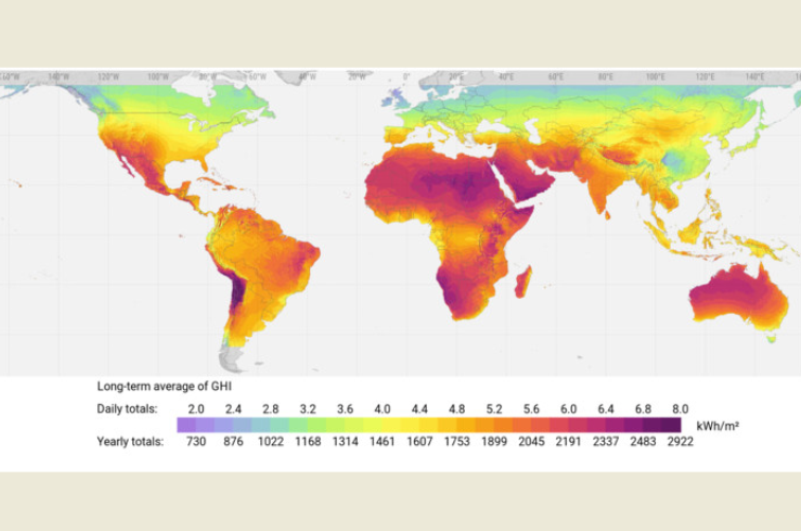
Paul de Lespinasse would like us to think broader than just time-based storage. After all, he reasons, it may be winter in one hemisphere, with solar collection less efficient there. But the opposite would apply in the other hemisphere surely, which might have an abundant over-supply. If we connected the two grids up, we would have a global location-shifting renewable energy system in place!
The Benefits of a World-Wide Electric Grid For All
The article we link to below speaks strongly of the benefits of a world-wide grid. Location-shifting renewable energy would avoid the winter energy problem, and allow seasonal exchanges between hemispheres. It’s a pipe dream still, we must concede, but one we admit to having enjoyed sharing.
More Information
Optimizing Battery Performance for Climate
Temperature Batteries And Arrhenius Equation