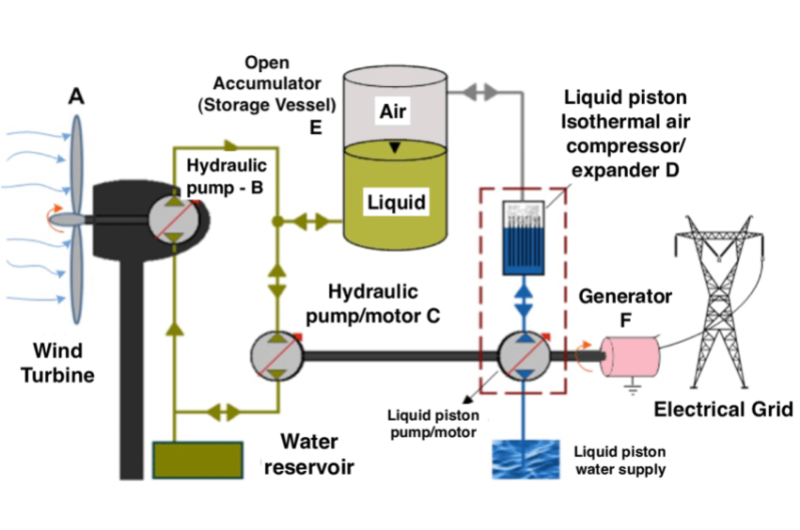
Long-duration energy storage systems (LDES) are modular, large scale storage solutions able to discharge over long periods. Saur Energy International pegs the minimum discharge duration at eight hours, although this could be much longer. This duration can be superior to lithium-ion batteries, but it comes at a higher cost. We explore the potential for LDES to grow.
New Report Predicts Long-Duration Energy Storage Growth
Saur Energy explains the thrust of a new Bloomberg-NEF Research study into this topic. The overall conclusion is that LDES will out-compete with lithium-ion batteries in some markets, as decarbonisation plans become more ambitious.
However, the report continues, most long-duration energy storage systems are still too immature and costly to compete with lithium-ion. However, a few of these systems are making progress, as these examples illustrate, and we quote:
- Thermal energy storage and compressed air storage, for example, had an average capital expenditure of $232 per kilowatt-hour,and $293/kWh respectively.
- Whereas lithium-ion systems had an average capital expenditure of $304/kWh for four-hour duration systems in 2023, so they are generally shorter-term storage.
Flow batteries also received a favorable review in the report. However, similar to compressed air and thermal, they will depend on growing demand and lower cost to really make an impact.
Typical Time to Discharge Will Also Drive LDES Success
Cycling time in terms of time to charge, and discharge duration, will continue to be critical success factors for growth, according to Saur Energy. This factor could be the clincher for long-duration energy storage, in terms of stepping in when renewable energy is intermittent.
China, for example, already leads in compressed air energy storage, flow batteries, and thermal energy storage. While other nations are still tinkering with these technologies, China is already reaping the benefits of favorable policies. Several gigawatt-hour scale projects there are already on the way to coming on line.
More Information
Compressed Air Battery Progressing in Canada
Barocaloric Effect in Thermal Batteries