The invention of the lead-acid battery in 1859 was a major advance in electricity storage. Gaston Planté had shown that lead plates and sulfuric acid could store the energy for later use. But making early lead-acid batteries in large numbers was still not easy.
Turning a Laboratory Invention Into Practice Was Not Simple
Turning Gaston Plantés laboratory invention into a practical product remained a challenge. His original battery used two pure lead sheets separated by insulating material and rolled in a spiral.
It could recharge, yes, but the plates needed repeated charging and discharging to develop useful active material. This ‘formation’ process took considerable time.
The Next Important Improvement Came From Faure
The next step to making early lead-acid batteries in quantities came from Camille Alphonse Faure, in 1881. He developed a method of coating lead plates with a paste containing lead compounds. This greatly increased the amount of active material available for chemical reactions.
However, manufacturing these improved plates still required care. The paste had to be prepared correctly and applied evenly. The material then needed to be dried and formed so that it would remain attached to the lead support.
There Were Other Difficulties. Lead Is Heavy
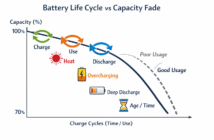
There were other difficulties. Lead is heavy, and the plates had to be strong enough to withstand handling and repeated cycling. If the active material became loose, battery capacity could fall.
The acid also created corrosion problems, especially where the lead supports were exposed to the electrolyte.
Manufacturers Gradually Developed Better Manufacturing Methods
Manufacturers gradually developed better methods for casting lead grids, applying paste, curing plates and forming them electrically. These improvements helped turn lead-acid batteries into products that could be manufactured in larger numbers.
The early accumulator was therefore not difficult merely because of its chemistry. It was difficult because every part of its construction had to work together.
The development of reliable manufacturing methods helped lead-acid batteries move from experimental laboratories into electric vehicles, lighting systems and industrial applications.
More Information