


Watts cost us money because they are the basis on which the utility charges us. So they are a bit like fuel we purchase at the gas station. So many gallons cost so many dollars. Watts work the same way, the more we use the more we pay. Watts cost us money as a nation too. We spend huge amounts of capital on power stations, that we could use better tackling global warming.
Where We Are Using the Most Watts
The average consumption per American utility consumer was just short of 11,000 kilowatts a year in 2015. As a kilowatt is equal to 1,000 watts that equals 30,000 watts a day. Here is a snapshot from the U.S. Energy Information Administration. As we can see, the local climate does play a part. There is much more interesting information there, so please do look around.

More Information about How Watts Cost Us Money
We can find information about the power consumption of an appliance on the box, on the instruction leaflet, and on the equipment itself. Often all we have to go on is the latter. For some reason manufacturers put the information in inaccessible places like on the back of the fridge. We found a useful table on a Belgian website. We do not suppose the watt ratings are much different in the States.
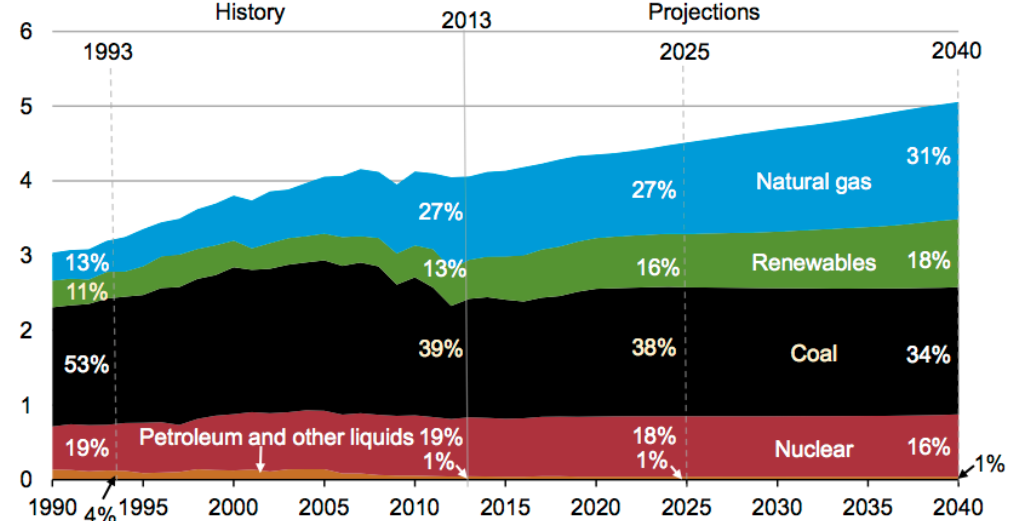
As a nation, we are gradually adjusting our sources of primary energy away from coal. However, fossil fuels will still be providing half our watts in 2040. Thus, we should continue managing how watts cost us money by choosing energy efficient appliances. We have to do this, in order to hand a world that keeps improving over to our kids.
Related
Preview Image: James Watt


