Where there is smoke there is fire. But, when Jeff Bezos of Amazon and Elon Musk from Tesla square up, there are bound to be sparks. Elon has sunk his future and fortune into lithium batteries. Thus, we can understand why he calls fuel cells ‘fool cells’. When we heard Jeff acquired a right to 23% of a fuel cell manufacturer we had to know why. Specifically, we wanted to know why Amazon has started using fuel cells in its warehouses.
Amazon Using Fuel Cells for Round-the-Clock Logistics

Amazon is a huge distributor warehouse with a server in the front office. Logistics is a critical factor in outperforming brick and mortar stores. It has an army of forklifts working around the clock.
Running these on batteries no longer works for Amazon because of the downtime taken to replenish them. Walmart and other mega-distributors have reached the same conclusion.
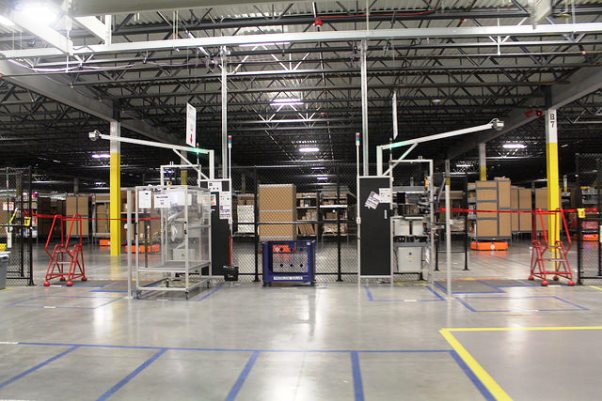
Using fuel cells is considerably more expensive than having lead-acid batteries. However, they have the advantage of never needing recharging. All they require is a quick top-up of their hydrogen tanks, and they are ready to go again.
Thus, there is a big saving in forklift downtime. And that’s what attracts logistics managers shaving every possible dollar of savings.
So is Elon Musk Wrong When he Talks About ‘Fool Cells’
The answer depends on how we use batteries versus fuel cells. Lead-acid batteries are the right application for forklifts in intermittent use. In contrast, using fuel cells comes into its own when a forklift works continuously twenty-four-seven. By increasing forklift uptime, Amazon reduces forklift cost per item handled. With the company turning over US$140 billion annually, we now understand why Amazon started using fuel cells.
Related
Fuel Cells 101: An Introduction to the Basics
Charging Lead-Acid Battery Banks
Preview Image: Amazon Warehouse