Traditional batteries may be limiting further progress with certain small compact electronic devices. This is due to these batteries’ rigidity, and their sheer physical size. Scientists at Tata Institute of Fundamental Research in Hyderbad, India, and University College London studied micro batteries for the smallest machines they imagined. And they appear to have come up with a workable model.
The Right Technical Environment for Micro Batteries
Many great battery ideas falter because the technology to achieve them is not yet available. However. we have seen recent progress in advanced materials, 2D / 3D micro-fabrication, and printable non-lithium chemistries.
These positives have enabled significant improvements in battery performance, safety, and scalability. The London and Hyderbad scientists scanned this evolving environment and charted a way forward.
They determined that zinc-air micro batteries were appropriate for the smallest machines on their list. This was on account of their safe, earth-abundant materials, and high energy storage density.
Moreover, this chemistry also uses safe ambient oxygen as cathode. This makes zinc-air batteries a lightweight, sustainable, and cost-effective option for next-gen miniaturized electronics in the scientists’ view.
Assembling Zinc-Air Batteries For Smallest Machines
The scientists from Hyderbad and London pulled out all the stops to build their novel micro zinc-air battery:
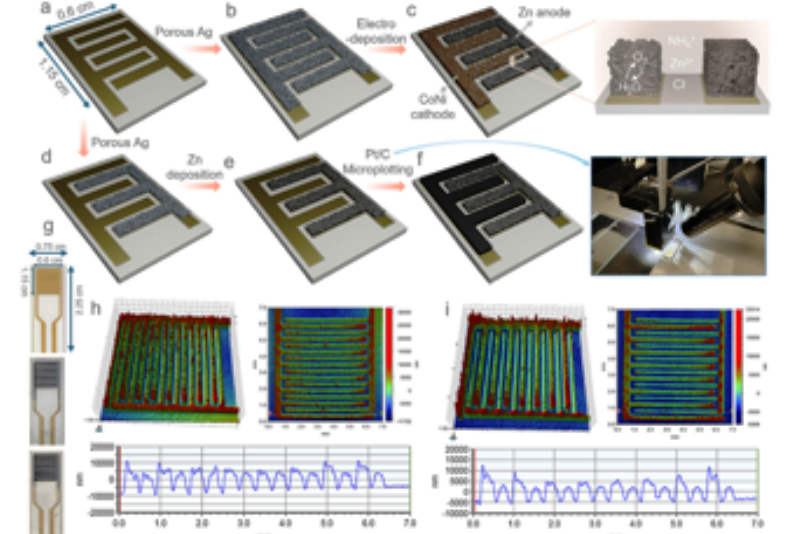
- They electro-deposited a platinum-on-carbon layer as a bi-functional cathode with dual roles.
- This meant their cathode could catalyze both oxygen reduction and oxygen evolution as it cycled.
- Then they created the anode by depositing zinc on a porous silver scaffold, to complete the electrode pair.
The prototype micro battery for the smallest machines imaginable, outperformed most other miniaturized batteries. However, the work is not complete. The scientists have more work to do before this miniature zinc-air battery could become a commercial reality.
Tech Explore suggests that this future work includes developing a more robust cathode and anode, and suppressing zinc dendrites. None the less, this appears to be a concept with good promise, and we wish the scientists every success going forward.
More Information
Micro Zinc-Air Batteries For Tiny Robots
Rice-Size Galvanic Pacemaker For Patients
Preview Image: Zinc-Air Battery Fabrication