Even if we continue plundering our earth, we will still be forced to source more critical minerals from recycling batteries, in the end. Plundering our earth is a deeply concerning thought, because earth’s resources are not open-ended. Therefore, it is not good news that battery material recycling technology and infrastructure are still lagging behind.
Mining More Critical Battery Minerals Instead
The World Economic Forum agrees that this mineral shortfall, means we have to increase mining. There are three reasons why we believe that future generations will judge us harshly for this:
- Mining fresh critical minerals is more expensive than recycling used ones.
- More expensive batteries will affect the cost of storage, and electric cars.
- Meanwhile, the earth will continue warming with grave consequences.
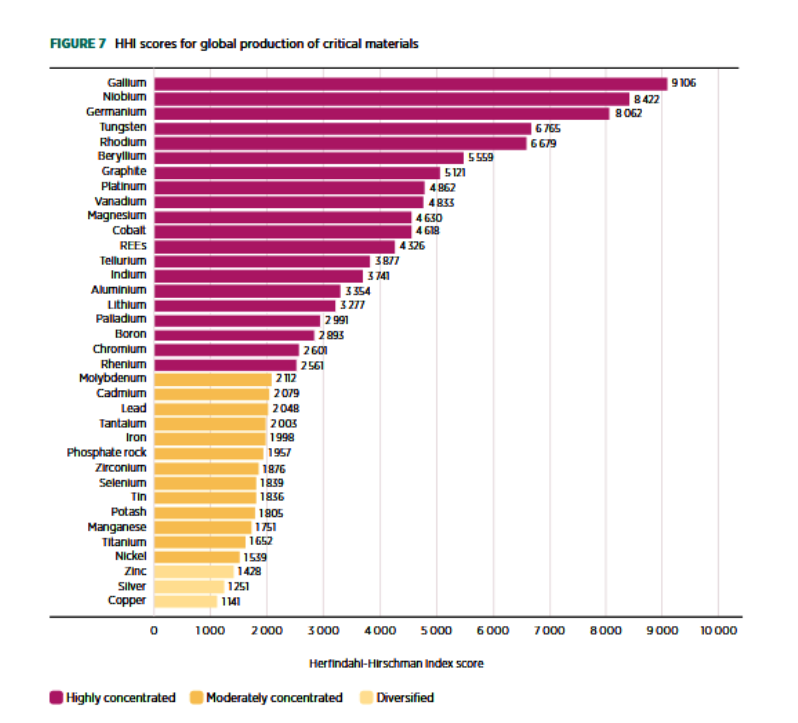
These factors increase our concerns further over future mineral availability, particularly where a longer bar in the graph below represents a more concentrated market for that mineral:
Lithium Metal for Batteries – A Case in Point
Lithium metal is a excellent example of the worldwide dilemma our industry is facing. Psychiatrists once referred to the metal as ‘white gold’, because they believed it cured depression in the 19th Century, according to a report in National Library of Medicine.
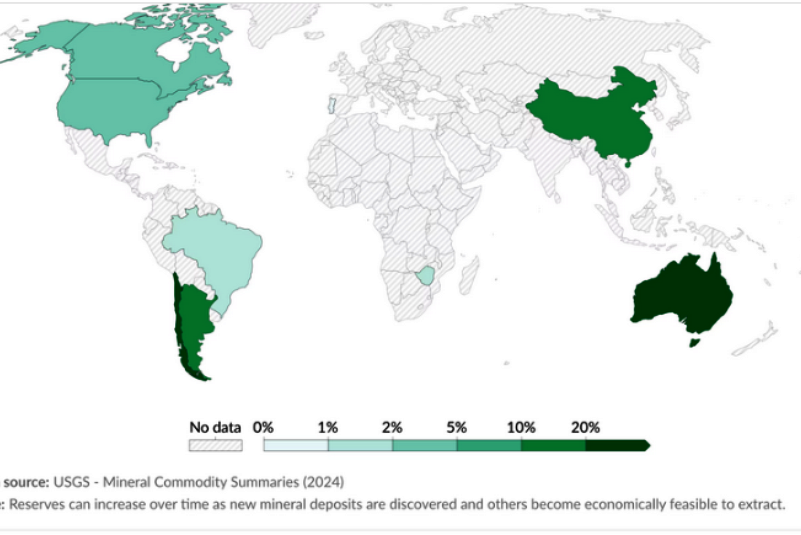
Mining the mineral for lithium-ion batteries took the metal into a whole new ballgame. Australia now produces a whopping half the world’s requirements, followed by Chile and China with 25% and 18% according to World Economic Forum.
Narrowing the Critical Material Supply Gap
Clearly, we need to mine more critical materials, in order to increase the world’s supply of used batteries for recycling. World Economic Forum proposes fresh government policies, investments, and innovation are essential, if we are to meet a fourfold demand growth by 2040.
However, our long-term solution surely lies in recycling used battery materials? How else could the global battery industry claim to be part of the green movement, while pumping so much carbon into our atmosphere… Our lead-acid battery industry is already achieving 95% recycling success.
More Information
Lithium-Ion Material Supply Chain Exposed
The Critical Minerals for Energy Transition