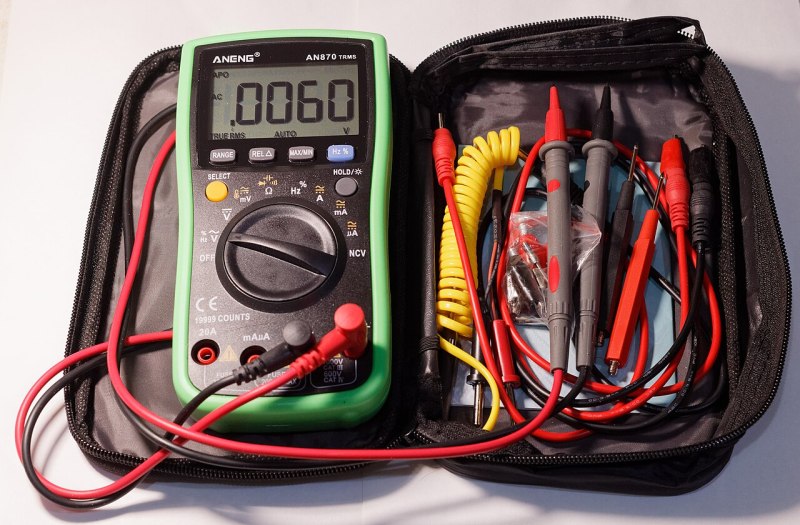
A starter battery for a gasoline auto is a critical component for any driver. Unless they are brave enough to try the push-and-jump-in routine, which can be dangerous. We describe a multimeter test for a starter battery here, in good faith and to the best of our knowledge.
DO NOT ATTEMPT THIS TEST IF THE BATTERY IS HOT, OR THE CASE IS CRACKED, OR YOU SMELL OR SEE GASOLINE OR ANYTHING UNUSUAL
Multimeter Test On a Fully-Charged Starter Battery
Locate the two terminals on top of the battery in the engine bay or trunk. You may need to unclip, or fold away plastic covers to access the terminals. DO NOT use a metal tool, because you could accidentally cause a short circuit. There may also be a secondary cover over the positive terminal marked with a ‘+’ sign,
Double check that there are no loose metal tools or other loose metal items in the engine bay or trunk before proceeding. Take up your multimeter, and set the dial to 20 volts DIRECT current. Now set the meter down on a level surface in the engine bay, while holding the two probes in the other hand:
- Hold the red positive probe against the positive red battery terminal.
- Hold the black negative probe against the negative black battery terminal.
- If you get a negative multimeter reading then the probes are back to front.
- If not, then the multimeter reading should be greater than 12.6 volts.
The 12.6 volt reading assumes we are doing a multimeter test for a starter battery that is healthy, and fully charged. A battery that reads 12.2 volts holds a nominal 50% charge. If that drops to 12 volts, then the starter battery is effectively flat, and cannot perform.
If a starter battery keeps going flat regularly, then this does not necessarily mean the battery is faulty. The problem could also be a circuit somewhere in the auto, draining the battery even when the ignition is switched off.
More Information
How to Use a Multi Meter to Measure Electricity