Do you recall the excitement when NASA developed a nickel-hydrogen cell with 26% potassium-hydroxide? Well perhaps not all the technical details, which were impressive. Although when International Space Station only required new batteries after 19 years, that caused more than a ripple of interest. But the technology was too expensive for commercial applications. Until a break-through U.S. firm announced a new hydrogen battery design.
The Call for a New Hydrogen Battery Alternative
Canary Media tipped us off how a fellow named Jorge Heinemann had been searching for an alternative to lithium-ion chemistry. Then he received a call from EnerVenue he was so busy he almost ignored it.
We have an idea for a new hydrogen battery they told him. As they chatted, Jorg learned they had developed a replacement material for the extremely expensive platinum catalyst. This would make the new product radically cheaper, but they needed someone to bring it to market.
Since then, Canary Media says the pace has been dizzying compared to the slow simmer of most hardware startups. Although for now the details of the new material are still under wraps. And so we will have to be patient for a while longer.
Incubation Funds Arrive to Support New Venture
$12 million seed-funding arrived in 2020, followed by a further $100 million from Schlumberger New Energy and Saudi Aramco Energy Ventures. Fast forward to 2023 (blisteringly fast by battery standards) and EnerVenue is constructing a $264 million factory in Kentucky to start rolling product out.
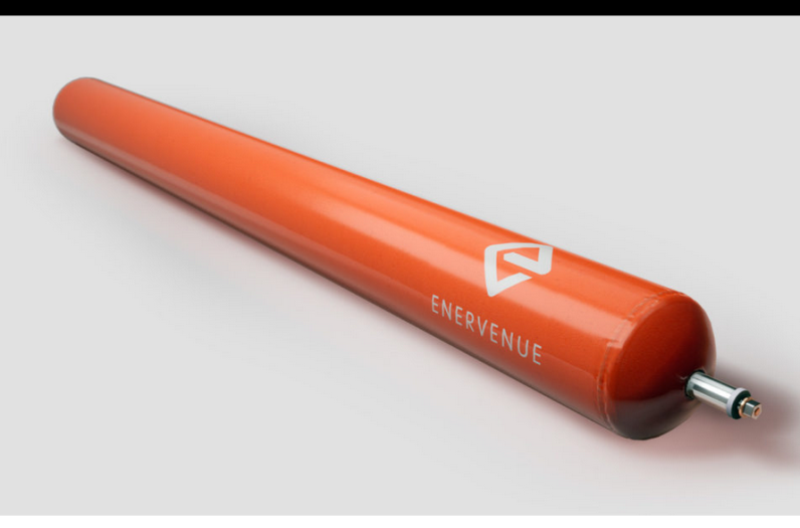
The energy storage vessels, as they call them look like a cross between a cylindrical battery, and a portable gas cylinder. They can be housed in racks, containers, or stacked in custom warehousing the company says. If the technology compares with lithium, but cannot catch fire, then this new hydrogen battery should be the development to watch next year.
More Information
All About Batteries at Department of Energy