The three major components of a lithium battery cathode are active material, electrical conductivity additive, and binder. The latter two combine to form the carbon binder domain according to Chemistry Europe. On December 22, 2022 University of Chicago’s Pritzker School of Molecular Engineering announced fresh research into this less-visited topic.
Battery Wear and Tear in the Carbon Binder Domain
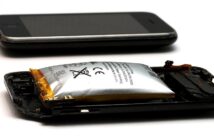
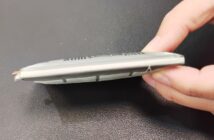
Lithium batteries begin to degrade from the first moment we use them. They hold charge for less and less time, and then they stop working completely. Researchers at Pritzker School of Molecular Engineering are using two techniques to understand this. These are high-powered electron microscopy, and computational modeling.
Their work recently took a novel turn when they turned their attention to the ‘oft-ignored’ carbon binder domain. “We need to keep innovating to tackle energy storage challenges,” explains Shirley Meng leading the research team.
Lithium batteries have made a great contribution to rechargeable, lightweight electronics. However, they do develop ‘particle cracks’ and other material damage during charging and recharging. Our understanding of this to date centers around smaller, thinner lithium battery electrodes. But this scenario is changing.
Thicker, More Energy-Dense Electrodes Are Emerging
Larger lithium batteries require thicker, more energy-dense electrodes for electric cars, trucks and airplanes. “The kinetics of a thick electrode are quite different from those of a thin electrode,” explains Minghao Zhang of University of California San Diego.
“Degradation is actually much worse in thicker, higher-energy electrodes, which has been a struggle for the field,” he continues. “It’s also harder to quantitatively study thick electrodes. Because the tools that previously worked to study thin electrodes, can’t capture the structures of larger, denser materials.”
Drum roll for the researchers at Pritzker School of Molecular Engineering. Their combination of high-powered electron microscopy, and computational modeling is closing the gap. They have discovered how lithium battery performance fades over time, as the contacts between the carbon binder domain and active materials degrade.
More Information
Very Simple Guide to Electrons
Why Should I Prime a New Battery?