Recharging conventional batteries in deep space is a non-starter. There is no solar energy available beyond our solar system, and no wind because there is no air to circulate. Unmanned underwater vehicles are at a similar disadvantage. Plutonium nuclear heat generators help, but they are relatively bulky. Breaking news confirms that Adelaide University in Australia, is developing compact next gen betavoltaic batteries for space.
Pre-Commercial Betavoltaic Batteries Coming Soon
Adelaide University is working with South Australian engineering firm entX to bring its ideas to fruition. “This $1.8m project is a clear example of how value-added manufacturing can take break-through research, and make it manufacturable at scale,” a University spokesperson observes.
The GenX Betavoltaic Power Generator, as they call it, is achieving unprecedented power density in a remarkably compact form. This is partly due to beneficial manufacturing and advanced surface engineering. But how does this technology work in practice?
Plutonium batteries, also known as radioisotope thermoelectric generators, use heat from radioactive decay to generate electricity. This delivers high power for decades, but it requires heavy shielding.
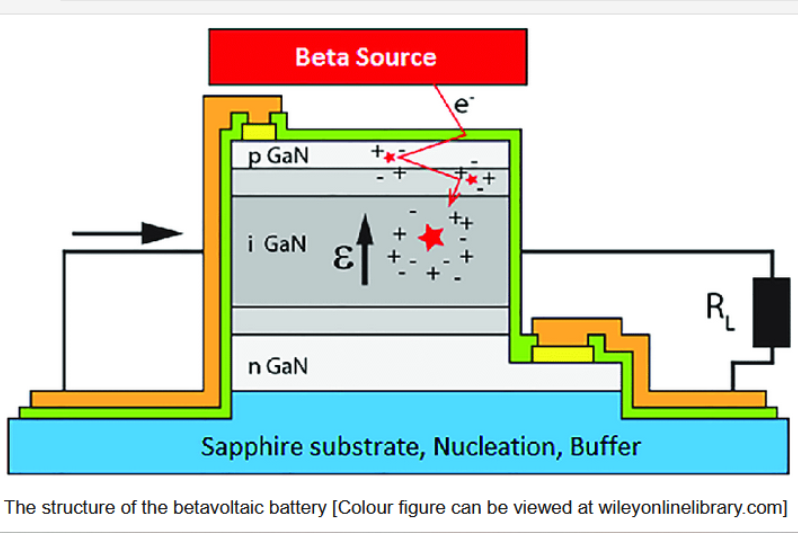
Betavoltaic batteries use fast, high energy beta particles to create electricity directly. This produces extremely low power that lasts for decades, and needs minimal shielding. This combination could be ideal for micro-devices and sensors.
Significant Benefits From Next Gen Batteries
Adelaide University’s next gen, betavoltaic batteries seem set for a great future. That is, if they succeed in delivering long-term, continuous energy, in situations where maintenance, recharging, or solar access is impractical.
“GenX is fundamentally changing what’s possible, by re-engineering betavoltaics as ultra-thin value-added manufactured devices,” an entX spokesperson observes. “We’re achieving power density that was previously out of reach, and enabling entirely new mission profiles.”
“This is not an incremental improvement, it’s a genuine step-change,” says Adelaide University’s Prof Drew Evans. He helped develop the GenX prototype photovoltaic battery, and will lead the research project into next gen betavoltaic batteries for space at Adelaide University.
More Information
Thermonuclear Battery For 50 Years Talk Time
Voyager 2 Radioisotope Batteries Soldier On
Preview Image: Structure of Betavoltaic Battery