Batteries are in the forefront of space exploration because they are the source of its motive power. Take NASA’s planetary mission named DART for double-asteroid-redirection-test for example. This aims to take sci-fi into the ‘brick-and-mortar’ world, by nudging an asteroid’s path. We need to know if we could do this, if we had a large asteroid hurtling directly towards us. And threatening to strike Spacecraft Earth a devastating blow.
Electricity Nudging an Asteroid’s Path on Batteries
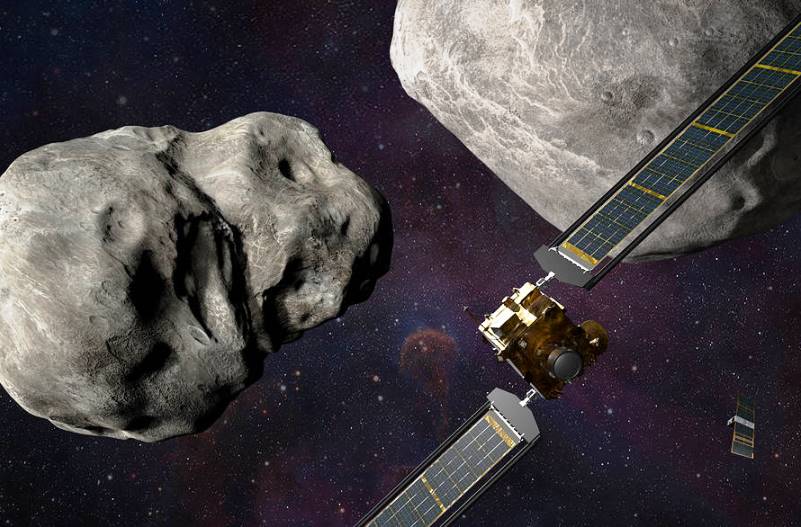
There are two small spacecraft taking part in the mission. The larger, NASA one harvests its energy from the sun, and powers itself via batteries smoothing the flow. The smaller, Italian HERA will be in attendance to closely observe what happens during the experiment.
The target is a small lump of rock astronomers call Dimorphos, because it will look different after the exercise. Dimorphos is a satellite moon of the larger Didymos asteroid measuring 780 meters across. Its name stands for ‘twin’ on account of its binary appearance.
But the DART vehicle will only be able to distinguish Dimorphos from Didymos in the final fifty minutes of its journey. It will then adjust its trajectory and collide with the smaller space object under full control of its computers.
This Sounds Risky. How Safe Is This to Do?
Nudging an asteroid’s path could be dangerous if it were a large object just about to miss Planet Earth. That’s because a slight error could prove disastrous. However, in this instance Dimorphos is only 170 meters across, and the impact should only reduce its orbit by 10 minutes to 11 hours 45 minutes.
DART will stay in close contact with NASA technicians as it approaches Dimorphos at the end of a 10 month journey. However, the time lag between signals means they have to rely entirely on the onboard computer they painstakingly prepared, and programmed for the moment of impact. Batteries have come a long way in the last couple years too.
Breaking News
Recycling Lead Batteries in a Circular Economy