Watching a video on YouTube where a lithium-ion battery overheats and explodes in a laboratory is quite dramatic. There are three main ways we could try to prevent this. The Verge summarizes these as follows: “avoiding flammable liquids for a solid battery; making battery components fireproof; and modifying slightly the existing features in a battery”. Surprisingly, its preferred solution revolves around tinkering with designs by making small changes.
Is Modifying the Electrolyte the Preferred Solution for Battery Fires?
The main reason for lithium-ion fires is battery malfunction leading to thermal runaway where the temperature increases. Lithium battery fires would be avoidable if the electrolyte were a non-flammable solid. This is not the case at present. Perhaps we should start here as the preferred solution.
Non-flammable solid electrolytes sound attractive because they can’t burn. However, they pose practical problems. Solid state batteries such as glass and ceramic break under shock or pressure. Polymer batteries work best at high temperatures, something we don’t want in our pockets. We hear of solid-state solutions “in two or three years”. However, this is unhelpful when the passenger sitting next to us in an airplane announces their laptop is overheating because of their solid-state batteries.
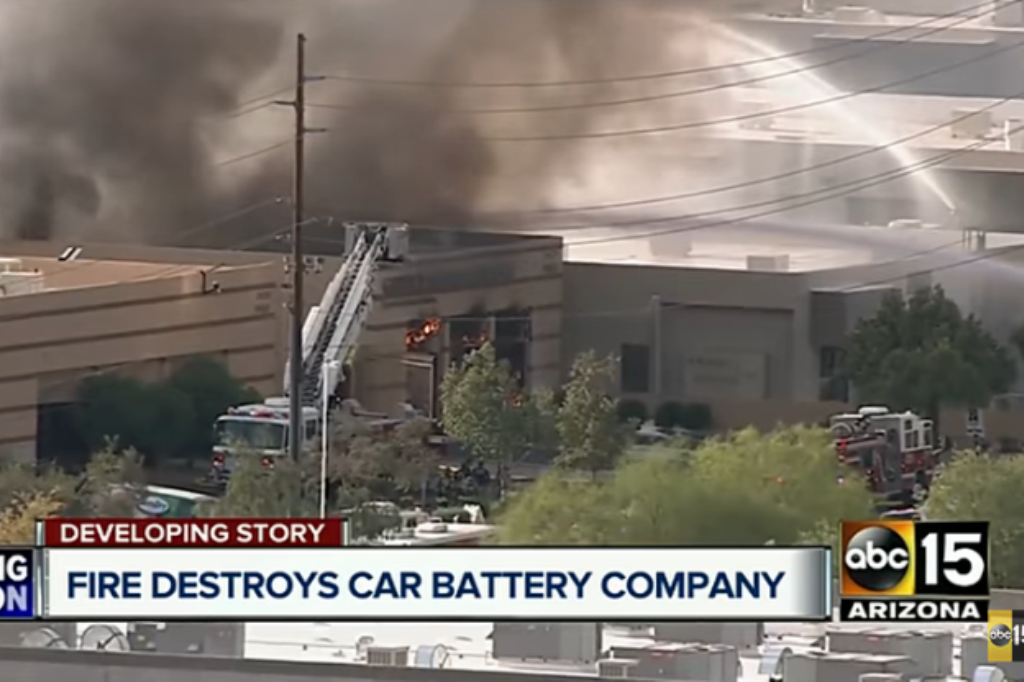
Fire at a Factory Producing Lithium Batteries
Perhaps the Answer Is a Non-Flammable Liquid Electrolyte?
This idea appeals instantly, although not in terms of battery life. Scientists are beavering away with hopes of achieving 500 charges and discharges. Pure water-based batteries work for a while, but fail dismally and get nowhere near that 500 target.
Therefore, The Verge’s solution of looking at existing features and improving them starts to make sense. The preferred solution could be improving battery-management systems that shut them down when they start to overheat. For example, SafeCore has had some success with a material that isolates the electrodes when the battery overheats.
We are definitely getting closer with engineered solutions, nipping away at problems using existing chemistry. These may have a better chance of managing lithium fire risks than new technology, and come to market much faster too.
Related
New Battery Technologies Becoming Obsolete
Lithium-Metal Batteries Are They For Real
Preview Image: In Video Fire Destroys Electric Car Battery Factory
Video Share Link: https://youtu.be/M5MHhAscP28