A Chinese company appears to have made real progress with battery electric flight. Their prototype has flown 14 miles across an open stretch of water, on the power of solid-state batteries. And now we hear they want to scale up to full commercial flights.
A Broader Program for Battery Electric Flight
This progress is a reflection of the Asian nation’s determination to expand production, within a framework of airworthiness certification. China is also integrating next-gen battery technologies into this program.
We understand from Car News China, that this plan includes developing low-altitude flying vehicles. into a ‘pillar industry’. The nation intends to bring aviation and road transport together, far beyond delivery drones.
This progress with battery electric flight extends beyond experimental work. China wants to move on from laboratory research and prototypes, to full commercial operations.
Preparing to Fly Commercially on Batteries
China has recently commissioned a pioneering manufacturing site, with latest artificial intelligence able to meet stringent aviation standards. The facility has capacity to produce 100 battery flying vehicles annually.
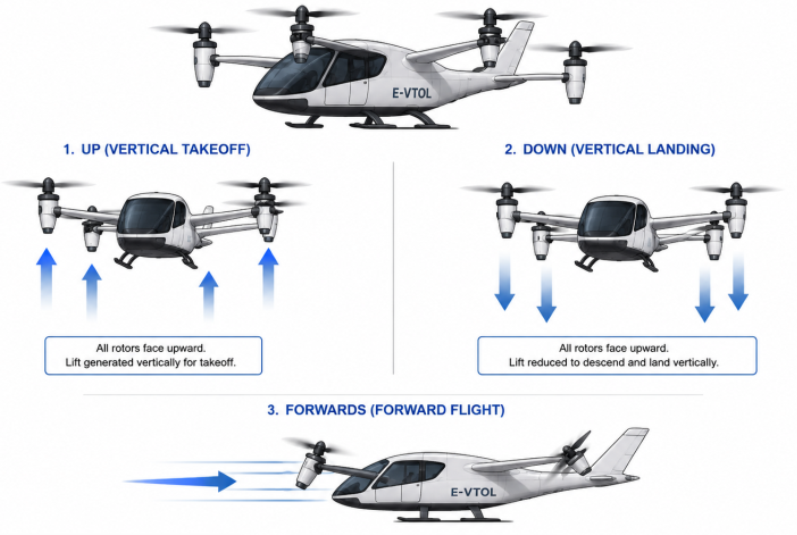
Output includes a dual-seat ‘multicopter’, with 18-mile flying range, and vertical take off and landing ability, The price of US$ 250,000 has already attracted 2,000 inquiries from tourism and sight-seeing operators. Another developer is undergoing certification of a six-seater electric aircraft.
More About Batteries to Support This
This progress with battery electric flight would not be possible without suitable batteries. Solid-state batteries are making inroads here, because they substitute solid electrolyte for flammable liquid lithium.
One solid-state battery of interest uses a metallic lithium anode, and oxide ceramic electrolyte. This combination has enabled a 48-minute test flight, because the battery lasts 60 to 90% longer between charges than conventional batteries.
More Information
Passenger E-Flight Needs Better Batteries