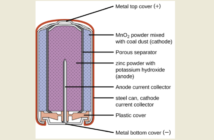
Capacity is the amount of energy in a particular battery. This depends on the number of cells inside it, and the active minerals in play. All batteries of a particular type and chemistry should share similar capacity when new, although this gradually fades. There are reasons for this capacity loss in batteries, and we share them here.
We Can Compare This Situation with a Water Bottle
When we purchase a bottle of mineral water it should be completely full. Except that is, for an empty zone at the top to facilitate pouring. But this empty space expands as we drink the water, until the bottle is empty. We could fill it up of course. But what if the top-up water was dirty, and gradually filled the lower half with sediment settled at the bottom?
Battery capacity works in a similar fashion – if we stretch our imagination. A cell starts accumulating ‘sediment’ over time, to continue this analogy. Charge time speeds up because there is less space to fill. Although the amount of available energy (capacity) reduces. There are several reasons for this capacity loss.
Two Reasons for Battery Capacity Loss
Linear Battery Capacity Loss Over Time
Linear battery capacity fade develops in a straight line with use, and this is the commonest cause. A small amount of this happens each time we charge a battery, and lose a few ions in the process. This stress is most severe if a deep discharge precedes it.
Our takeaway here is to charge a battery more frequently to avoid draining it deeply. But there are exceptions of course. There always are. Nickel-based batteries benefit from periodic deep discharges to reinstate memory settings, while smart ones may require initial deep charges to facilitate calibration.
Chemical Degradation by Battery Type:
- Lead-acid batteries suffer from sulfation especially if left on a low state of charge. Grid degradation may be countered with careful charging.
- Nickel based batteries develop crystalline formations affecting memory. Periodic deep discharges and charges help correct this.
- Oxidation is a natural part of lithium-ion cell aging and use. There is no known way to reduce it. All batteries eventually wear out.
Battery capacity loss can be very frustrating for users. We should send spent batteries in for recycling as soon as they become sluggish. Delaying this will not improve the situation. We are only kidding ourselves!
More Information
Lithium-Ion Battery Breakthrough at Wuhan