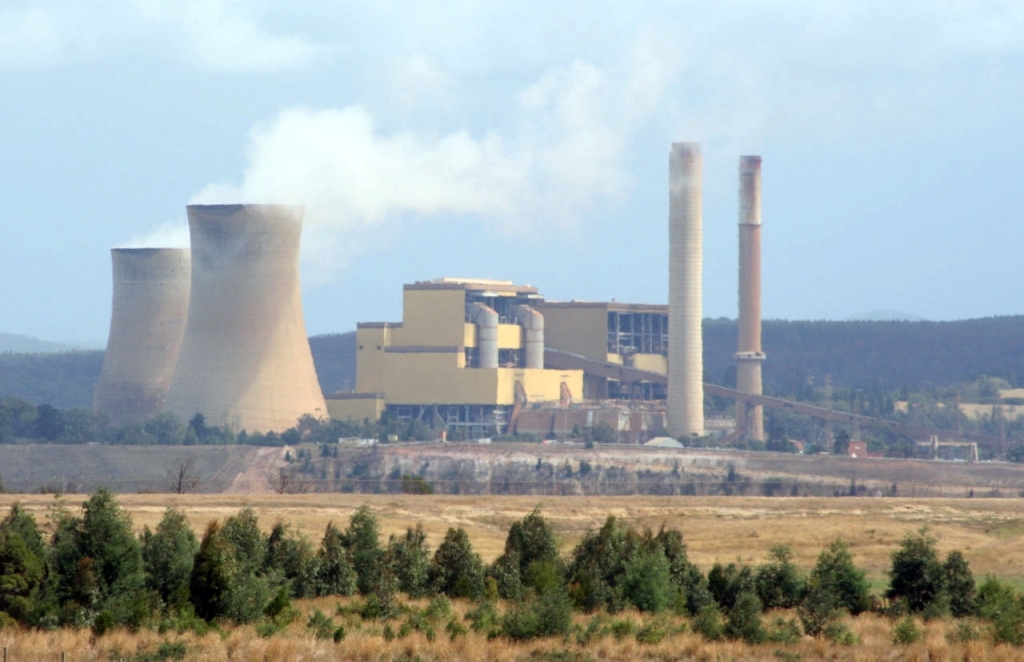
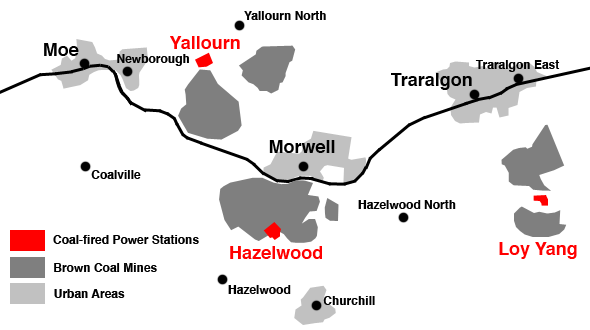
Yallourn thermal coal power station commissioned five generating units between the 1920s and the 1960s. It became a familiar sight in the Latrobe Valley of Victoria, Australia nearby a coal seam. These five units closed down progressively as they reached their design lifetimes. Now there is talk of renewable energy closing Yallourn W, the remaining, sixth unit that commissioned in the 1970’s.
Work Required Prior to Renewable Energy Closing Yallourn Finally

Yallourn Unit W is currently producing 1,450 megawatts of electricity via four Toshiba three-stage reheat turbines running on pulverized coal. This is 22% of Victoria’s electricity demand, and 8% of the Australia electricity market. Its scheduled closure date is 2032.
However, we may see renewable energy closing Yallourn as early as 2023 for several reasons. The aging equipment has failed 33 times in the past 18 months according to Renew Economy. Moreover the dated technology is under pressure in terms of Victoria’s ambitious plan to lower emissions. It has to, if it wants to meet its 2050 zero emissions goal.
Two Sides to the 2023 Yallourn Closure Challenge
Environmentalists say this is a no-brainer. because it would bring the state’s emissions to 60% below 2005 levels. However, power station owner Energy Australia argues the early closure could jeopardize its duty to provide reliable power its customers can afford.
Therefore more green energy is urgently required to balance demand and supply, and see renewable energy closing Yallourn power station by 2023. A study by Australian energy consultants Reputex quantified this for independent Environment Victoria. The new closure date requires an immediate investment in 2.6GW of large-scale renewables. The system will also need investment in battery storage.
Environment Victoria’s campaign manager believes these measures will close the supply gap when coupled with the rollout of solar homes. Furthermore he argues this is the only way to stabilize the Victoria grid, even after setting emission benefits aside.
Related
Australia Fails To Meet Emission Targets
Australia: World’s Biggest Lithium Ion Producer
Preview Image: Yallourn W Power Station