I like to fly as much as the next person, given that I have a squeeze buddy by my side – that is, the person who doesn’t mind having their hand crushed as I deep-breathe through normal bouts of turbulence. This year alone, over 4 billion people will get on an airplane.
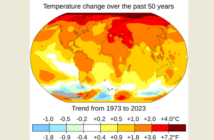
Personally, when I board an airplane, I’m not exactly thinking about the logistics of aircraft tech (I don’t need to go there. Correction: for the sake of everyone on flight, I shouldn’t), or about the emissions created by a single flight. Air travel is responsible for nearly 3 per cent of all global carbon emissions, and this will grow at a rate of 3.5 per cent per year.
A group of European “flight shamers” are hoping that they can embarrass people into not travelling via airplane by highlighting the effects of air travel on the environment.
KLM Taking off..Literally:
KLM is launching a new campaign called “fly responsibly” with a video on YouTube. They are working to change aviation to make it more planet-friendly, encouraging viewers to take the train or to pack light, or contribute to carbon offset funds.
KLM announced a global Carbon Offsetting and Reduction Scheme for International Aviation (CORSIA) last month through the UN’s International Civil Aviation Organization, in order to cap CO2 emissions from air travel at 2020 levels. The idea is to become carbon neutral and to generate more money for reduction initiatives.
Culture of Flying:
Regardless of the intention, we may have always been encouraged to fly, starting in the fourties and fifties, when it was glamorized in the media, picturing well dressed men and women boarding first-class flights. It’s also something that we highly encourage as a way of expanding ourselves as people by seeing the world.
In Europe, there has been an active take on the flight shaming movement, by charging extra money to offset emissions and ending the on-board duty-free sales to reduce the weights of aircrafts.
How to Reduce the Number of Flights we Take:
It will be a while before we actually think of an alternative to flying. In fact, we may never get there entirely emissions free. In the mean time, we can think about alternative ways of travelling. Perhaps taking a plane and then a train? Closer destinations, lighter packing, and Skyping into meetings rather than hopping on a flight. But can’t the same be applied to driving? Either way, we need to be prepared to pay the price on our next flight.
Related: