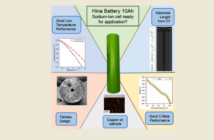
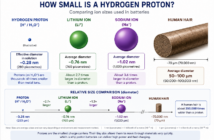
Lithium-ion batteries have made remarkable strides in an industry thirsting for greater voltage and current. However, this sector of our battery world faces upstart challenges promising even more power and greater safety. We review a perspective study on restructuring lithium-ion batteries to meet these challenges, that first appeared in August 2023.
Four Aspects to Restructuring Lithium-Ion Batteries
The study we refer to is the work of contributors Lauro, Burrow, and Mullins, and we link to it below. The main thrust of their work includes a perspective from four angles:
- Architectural redesign of lithium-ion battery electrodes.
- Overview of templating, gradient, and electrode opportunities.
- New directions that are scale-able and commercially feasible.
- Challenges facing designers of future electrode platforms.
The researchers conclude that revised lithium-ion electrode architecture offers the best path to better battery performance. They envision faster charging, greater storage capacity, and longer battery life flowing from this option.
This presents exciting opportunities for solar and wind energy storage, electric vehicle roll-out, and portable devices too. Moreover, restructuring lithium-ion batteries this way could counter the upstart challenges we referred to earlier.
Facing Up to Lithium-Ion Temperature Challenges
Lauro, Burrow, and Mullins turn their attention to the influence of temperature on the performance of lithium-ion batteries. These suffer a major loss of capacity and power when the ambient temperature falls to -20 C / -4 F.
A separate report by Yang and Associates in Science Direct, attributes this impairment to lithium-ions slowing as they pass through the electrolyte. This impairment affects users of a wide variety of portable equipment. It could cause them to migrate to other battery technology were this to become available.
The ambient temperature beyond our atmosphere, and deep in our oceans, falls to depths where no lithium-ion battery could survive. This hastens the need for alternative batteries, as we search for new materials beyond the surface of our planet.
More Information
Lithium-Ion Battery Mechanics Under Spotlight
Bio-Graphite Anode for Lithium-Ion Battery
Preview Image: Future Electrode Architecture Designs