The International Council on Clean Transportation (ICCT) has been pondering over right-sizing e-truck batteries, as more real-time information becomes available. The ICCT is an international, non-profit public policy think-tank. It depends on solid evidence to support its findings.
The Dilemma of Right-Sizing e–Truck Batteries
ICCT colleagues investigated the twin dilemmas facing e-truck fleet owners. In the first instance, fleet owners generally prefer driving ranges that reflect extreme, not average requirements.
In the second instance, e-truck owners tend to over-estimate the effect of battery degradation. This incorrectly assumes that the initial capacity dip continues at the same rate.
The ICCT associates began their survey in the e-car industry. There they noted how doubling battery size significantly reduces the number of charging stops. However, this strategy increases energy consumption, emissions, and total cost of ownership.
The researchers then turned their attention to right-sizing e-truck batteries. They wanted to know whether the same dynamics applied, and what made the best business sense for e-truck owners.
E-Truck Battery Size Versus Operating Cost
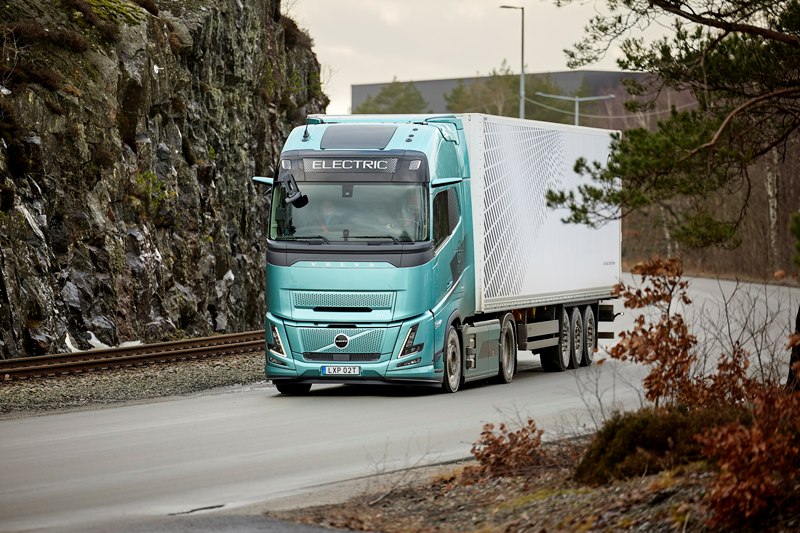
The team decided to ignore public opinion, and get back to reality on the road. This is what they found, when they studied a 40-ton e-truck used for regional deliveries:
- The e-truck averaged 220 miles a day, peaking at 320 miles daily.
- Drivers were required to take 45 minute breaks after 4 hour’s driving.
- The three simulations included original battery size, less 25% and less 30%.
- The team assumed the e-truck left the depot each morning on full charge.
- They also assumed that suitable recharging facilities were available.
- Those facilities could be at the depot, at customers, or at public sites.
- Finally, they assumed 30 minutes charging time, during 45 minute breaks.
The 40-ton electric truck completed all delivery routes, by recharging the standard battery during mandatory breaks. With the 25% smaller battery, there would have been a 7-minute penalty during worst-case scenarios.
With the 30% smaller battery though, there were 1-minute time penalties on average days. This length increased to 14 minutes in worst case scenarios. There would, however, be capital cost savings from using smaller batteries.
The International Council on Clean Transportation’s associates conclude as follows,” the future of electric trucking will be led by fleets that choose smarter sizing, over bigger batteries.”
More Information
Do Electric Vehicles Reduce Emissions?
Electric Vehicle Battery Degradation