The Proceedings of the National Academy of Science has doubled its worst case rate of projected sea level rise to 6.5 feet (2 meters) by 2100. While this worried some, other world leaders appear to have simply yawned. Are we becoming blasé about melting ice caps and rising sea levels? After all, floods in Bangladesh are hardly our problem, some say.
When Rising Sea Levels Become Our Problem
Let’s forget about 200 times more refugees than the Syrian crisis for now. London and Shanghai can sort their problems out, they have loads of money. But wait a moment…New York, now that’s a lot closer to home. We can’t allow our Big Apple to wash away now, can we?
A 6.5 inch increase could do more harm than that. A study by the University of Arizona revealed 180 U.S. cities could lose an average 9% of their land if rising sea levels reached half of that. Where there are sea ports, this could destroy their historic districts and CBD’s. What’s going on and how did we get into this mess …
Major Cities of the World at +4ºC
The Arctic Ice is Melting Faster than We Thought
The new predictions suggest the oceans could rise by between two feet (62cm) and 7.8 feet 238cm) by 2100. Researchers have come to this conclusion after examining melting ice in west and east Antarctica, and Greenland.
The most extreme scenario assumes our world warms 5ºC by 2100. Is this possible and should we worry about it? Earlier predictions assumed ice sheet melt would be mainly in Greenland. However, once we increase beyond 2ºC, west and east Antarctica become unstable and that’s the problem we face. The high end prediction is statistically unlikely but still concerning.
“If I said to you that there was a one-in-twenty chance that if you crossed the road you would be squashed you wouldn’t go near it,” says Prof Bamber of University of Bristol. Even a 1% probability means that rapidly rising sea levels could happen in our children’s’ lifetime, he warns.
Related
Are Floating Cities Delaying the Inevitable?
Winter Rain Melting Greenland Ice Sheet
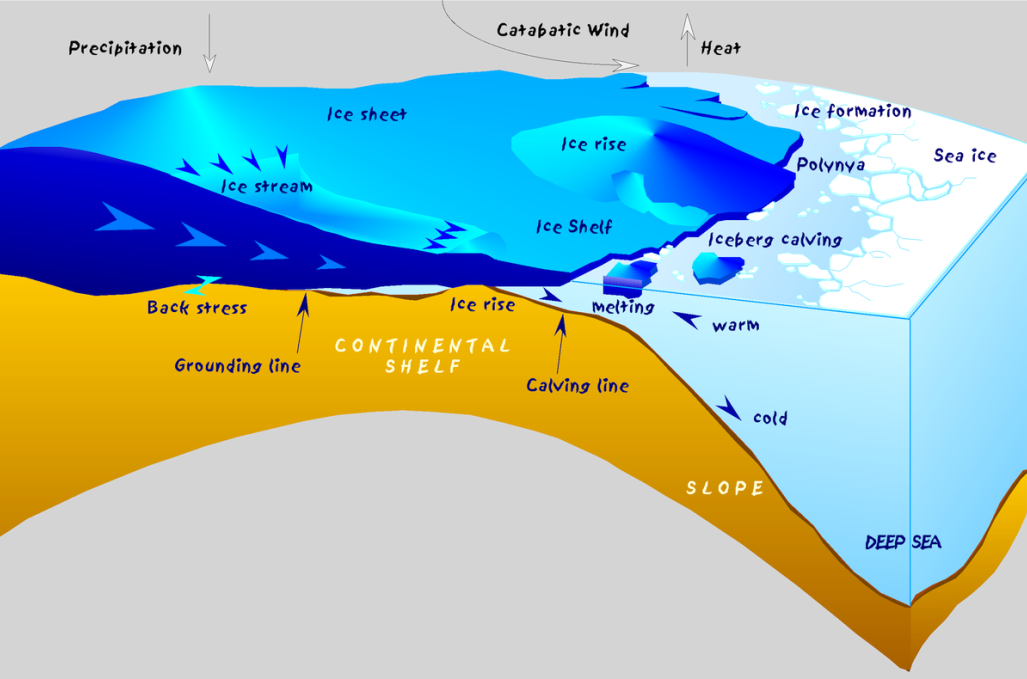
Preview Image: Processes Around an Antarctic Ice Shelf
Video Share Link: https://youtu.be/xE0KtLy5j8w