

A recent drone attack on an oil installation in the Middle East highlights how sensitive international trade is. It reminds us how the world became a global village where we all depend on open exchange. A political spat has disrupted crude oil prices. Battery material reserves could become another pawn in the game.
Global Warming Red Lights Battery Material Reserves
Ten years ago we might not have been concerned that the Democratic Republic of Congo owns 59% of world cobalt resources. This will remain one of the critically scarce battery material reserves, for as long as lithium-ion batteries dominate energy storage.
While the current DRC administration is unlikely to throttle delivery, its political future is notoriously unstable. Yet we don’t see a concerted attempt among western governments to find a cobalt alternative. Moreover, the Peoples Republic of China owns 67% of natural graphite. Finally, 44% of lithium is in Australia increasing North American reliance on imported battery materials further. While a further 34% and 13% of lithium is in Chile and Argentina respectively according to INSIDE EVs.
Are We Painting Ourselves into a Corner with Battery Materials?
That certainly could be the case were the world to enter another conflict period despite efforts at the United Nations. We increasingly rely on solar and wind power to throttle back our emissions, and hence storage batteries too.
If we lost our access to cobalt, lithium, and natural graphite, then storage battery production would take a hard knock. Sure, we report weekly on research to replace these scarce battery material reserves. But let’s be honest, how many of these projects have produced tangible results we can actually use in our devices?
We believe this has the makings of a worrisome situation, unless we move faster to secure our supply lines. That’s because, to be honest we don’t see our battery industry replacing cobalt, lithium and natural graphite any time soon.
Related
Cobalt Diamonds – Lithium Battery Challenge
Could Calcium Metal Become Next Lithium?
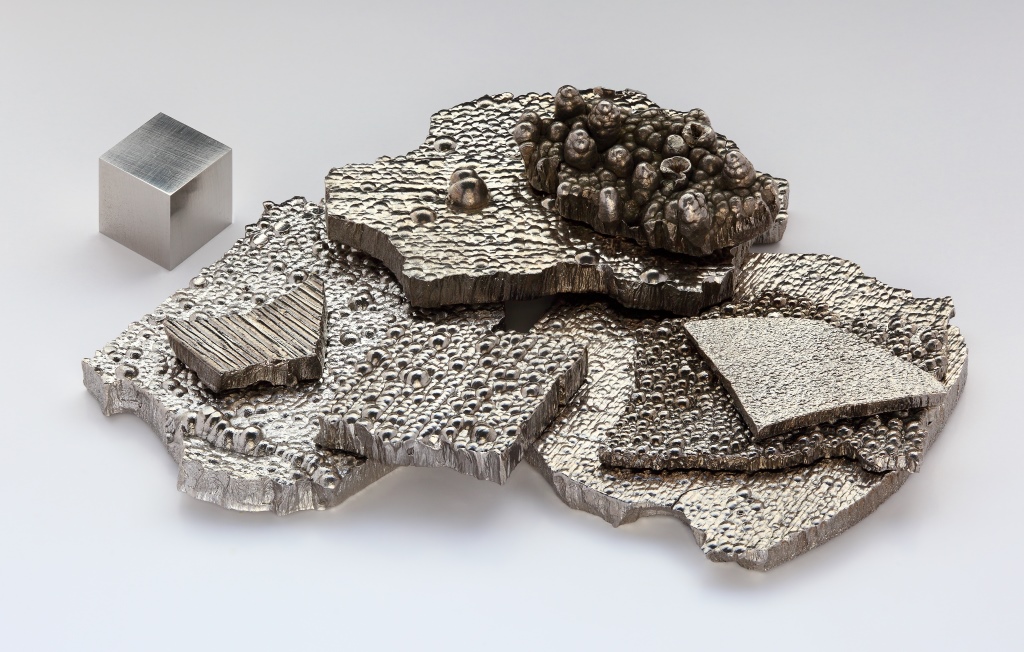
Preview Image: Cobalt Chips and High Purity Cube


