Scientists from the Department of Molecular Chemistry and Materials Science, at Weizmann Institute of Science in Israel, have been delving into solid electrolytes for lithium metal batteries. They were initially interested in the ratio between polymers and ceramic particles. After they found the ideal proportion, they investigated the SEI layer role in lithium metal batteries.
Why The SEI Layer Role in Lithium Metal Batteries?
The researchers established that the ideal ratio of polymers and ceramic particles in lithium metal battery electrolytes was 40 : 60. Although the dendrites were most numerous at this point, their growth was stunted.
The team wondered what was blocking dendrites growth, and surmised it was in the solid electrolyte interphase layer (SEI). We pick up the story at this point, in the second phase of their study,
A solid electrolyte interphase layer forms on the surface of dendrites/ when they interact with the electrolyte.This phenomenon consists of various substances, that may have a negative or positive impact in the battery cell.
What the Researchers Discovered As They Explored Further
The SEI layer role in lithium metal batteries can hinder or improve lithium ion flow, and material contamination between electrodes. The presence of a few nanometers of atoms can also encourage or discourage the growth of dendrites.
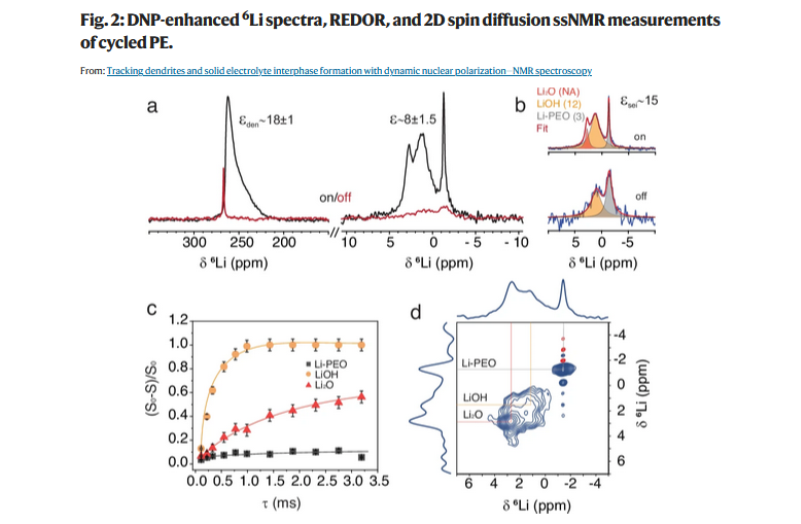
The team from Weizmann Institute of Science in Israel, used dynamic nuclear polarization to identify the detailed chemical structure of the SEI layer. This knowledge allowed them to follow the reactions between the lithium in the battery, and the constituents of the electrolyte:
- They knew whether a dendrite developed in interaction between the lithium and the polymer, or the ceramic, in the electrolyte.
- The SEI layers on the dendrites sometimes made ion transfer more efficient, while blocking dangerous substances.
This enhanced understanding of dendrites growth and mitigation, may lead to enhanced performance and safety in next-gen batteries. This could in turn contribute to the overall evolution of energy storage technologies.
More Information
Solution for Lithium Dendrites at Harvard