Nova Scotia is a province of northern Canada with land mass similar to West Virginia, and a population of 925,000. It is almost entirely surrounded by the Atlantic Ocean, but joined to North America by the Isthmus of Chignecto. Some 63% of its energy comes from coal and coke. Researchers at Nova Scotia Community College are investigating storing energy without batteries, in their quest for greener energy mix.
Storing Energy Thermally Could be a Better Option
Some 60 % of Nova Scotia energy consumption goes into warming indoor space. But this rises to 80% if we include heating water. ‘If you can find a way to store heat for when you need it later…’ explains energy researcher Wayne Groszko.
‘And if that happens to be more affordable than installing a bunch of batteries to store electricity – which it often is – then that can give you a lower-cost solution to storing your energy. So thermal energy storage, as we see it is part of our renewable future.’
Storing Energy Without Batteries: Part of That Future
Nova Scotia is heading in the direction of replacing coal and coke with wind and solar power. The researchers are considering various thermal heating products by startup companies to back this up.
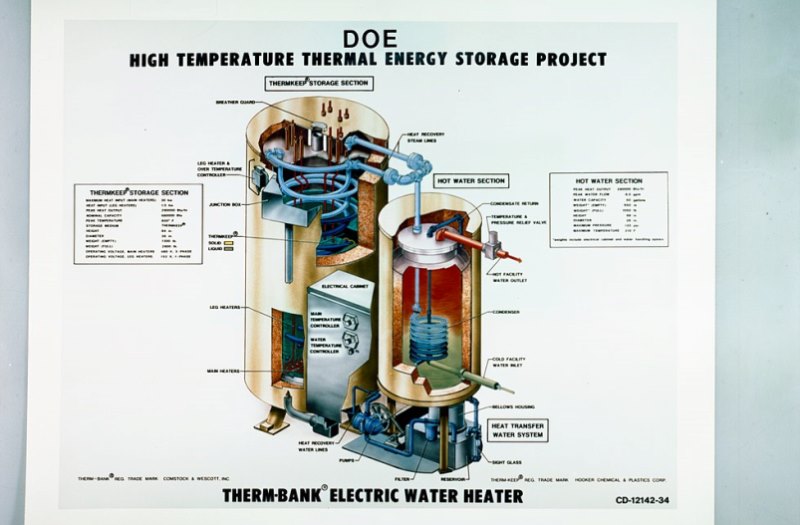
The concept involves superheating water in a home storage tank during off-peak hours. And then using it for space heating and hot water when the wind drops off as night falls.
Energy researcher Wayne Groszko’s team are investigating using smart controllers to achieve this, during low grid-demand periods. They are targeting solutions aimed at average-income households. Families sometimes unable to easily afford storage batteries.
Space heating and cooling is a large factor in Nova Scotia household energy bills. The researchers hope storing energy thermally will make renewable energy more affordable for each one of them.
Recent Posts
The Great American Christmas Tree Light Story
Battery Electric Freight Could Save 50% Energy
Preview Image: High Temperature Thermal Storage