

Lithium-Carbon Dioxide batteries (Li-CO2), use carbon dioxide from the atmosphere as their energy charge carrier. This combination shows potential for delivering high energy density, while capturing carbon-dioxide too. However, the design does wear out quickly and then fails to charge-discharge despite using expensive platinum metal. A novel University of Surrey battery captures CO2, without these disadvantages.
Capturing CO2 Gas With a Battery, Closer to Reality
These are early days, the scientists caution at University of Surrey in England. Nonetheless, they have invented a Lithium-Carbon Dioxide battery that stores more energy, while also contributing to a greener economy.
Carbon Dioxide in the atmosphere adds to global warming. An efficient battery that ‘breathes in’ the greenhouse gas while releasing energy, could be a step towards removing some CO2 from the atmosphere. What’s more, the University of Surrey battery captures CO2 while potentially outperforming lithium-ion batteries!
What The Surrey Scientists Did, to Increase the Possibility
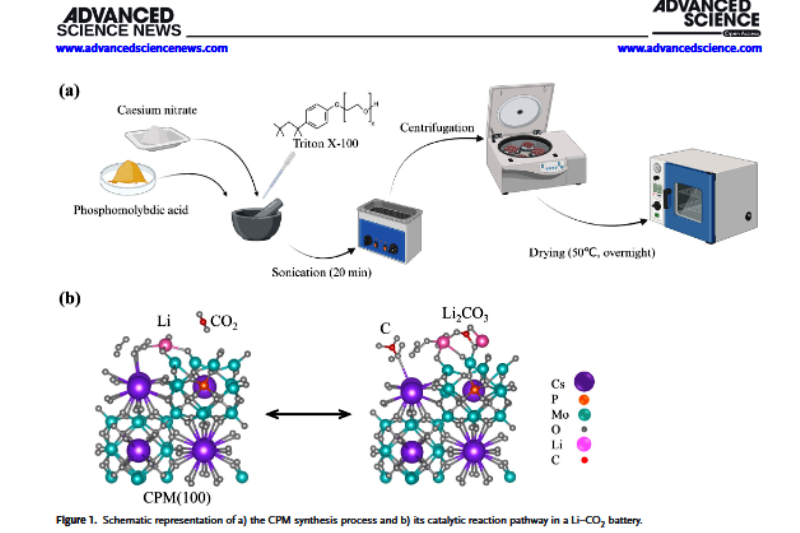
The researchers faced the reality of Li-CO2 batteries wearing out faster, and then failing to recharge. However, after lengthy searching, they stumbled over a low-cost catalyst called caesium phosphomolybdate (CPM).
This material occurs in nuclear waste, and already acts as a modifier in microbial fuel cell cathodes, where it catalyzes the oxygen-reduction reaction. The Surrey scientists tested their theory using computer modelling, and then in laboratory experiments.
Their dual method confirmed that this simple modification ‘allows the battery to store significantly more energy, charge with far less power, and run for over 100 cycles.’
“There’s a growing need for energy storage solutions that support our push towards renewable power,” a team member explains. The university press release closes with the possibility of reducing carbon dioxide in the atmosphere, while simultaneously launching a practical, scaleable way to store clean energy.
More Information
Capturing CO2 and Turning It Into Stone
A Mars Battery For a CO2 Rich Atmosphere
Preview Image: The CPM Synthesis Process


