Lead-acid batteries must have full charge before we store them, and we should top them up every six months when not in use. This needs a degree of self-discipline, because they charge slower that other types of batteries. A battery charger for home use is relatively expensive. You just need to know the correct way to charge lead-acid batteries before you start. Remember to use a well-ventilated space and avoid flames and sparks.
The Charging Process and How Long It Takes

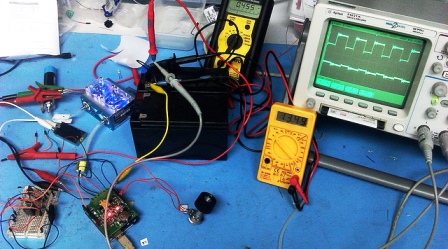
We use the constant current method with electricity from the grid, stepped down by the battery charger. After we reach the upper limit, the input current automatically drops because the battery is saturated. Expect this to take 12 to 16 hours for smaller batteries. Big stationery ones can take twice as long.
The correct way to charge lead acid batteries is to allow three stages to complete. The initial constant current application takes the lead-acid battery to 70% of its capacity in 5 to 8 hours.
The Correct Way to Charge Lead-Acid Batteries Further
After that, a slower topping-up process begins that takes 7 to 10 hours more to complete. This second step is essential to maintain battery health. If we cut the process short then the battery may ‘forget’ it has the extra 30% capacity.
All lead-acid batteries slowly ‘bleed’ capacity, even when idle. If we have our UPS, alarm, or other device connected to an electric source, the back-up battery will accept a small ‘float charge’ from time to time to maintain its full potential. Of course, if it is in storage then it needs our help.
The correct way to charge lead batteries is thus to do so in good time, and regularly when necessary. That way, they retain their full capacity, and we can call on them anytime.
Related
How to Nurture a Lead-Acid Battery
Equalize Your Boat Battery for More Power
Preview Image: Fuel Cell Battery Charger