

Dr. Amesh Adalja is an infectious disease doctor with Johns Hopkins University. This ranks her in the upper level of her profession, and makes what she says worth considering. WPXI Pittsburgh News caught up with her as Pennsylvania prepared to relax COVID restrictions in time for Easter. What they are doing is warranted, she said. The COVID virus could never leave us, and it’s we that have to adapt.
A Change Towards Normalcy Flattening the Hospital Curve
Dr. Adalja has a somewhat disruptive long term view as to where the coronavirus is leading us. ‘I think eventually what you’re going to see is a change in the risk perception of this disease,’ she told WPXI. ‘It will become something much more manageable. One that’s never able to land people in hospitals at the rate that it has done in the past.’
She has an interesting point of view. Governments have been shutting social gates as hospitalizations rise, fearful of their medical systems collapsing. And then re-opening the current surge calms down. She believes the severity of cases will reduce after vaccinations. Although right now some are still alarmingly high.
The COVID Virus Could Become One Never Leaves Us
The coronavirus is actually going to be with us forever, Dr. Adalja suspects. That’s because it has settled into the human population, and spreads efficiently. Years from now we will still have cases, because the COVID virus will never leave us. However, they will be less severe because of the vaccines.
So when will the public health emergency be over? Dr. Adalja envisages case numbers continuing to climb, until a vaccine becomes available to us all. Then the public emergency will be over, she believes. But will this be like the flu, where we take precautions or our chances with another infection?
Related
COVID Hearing Loss and Tinnitus Research
AstraZeneca Efficacy in U.S. Reconfirmed
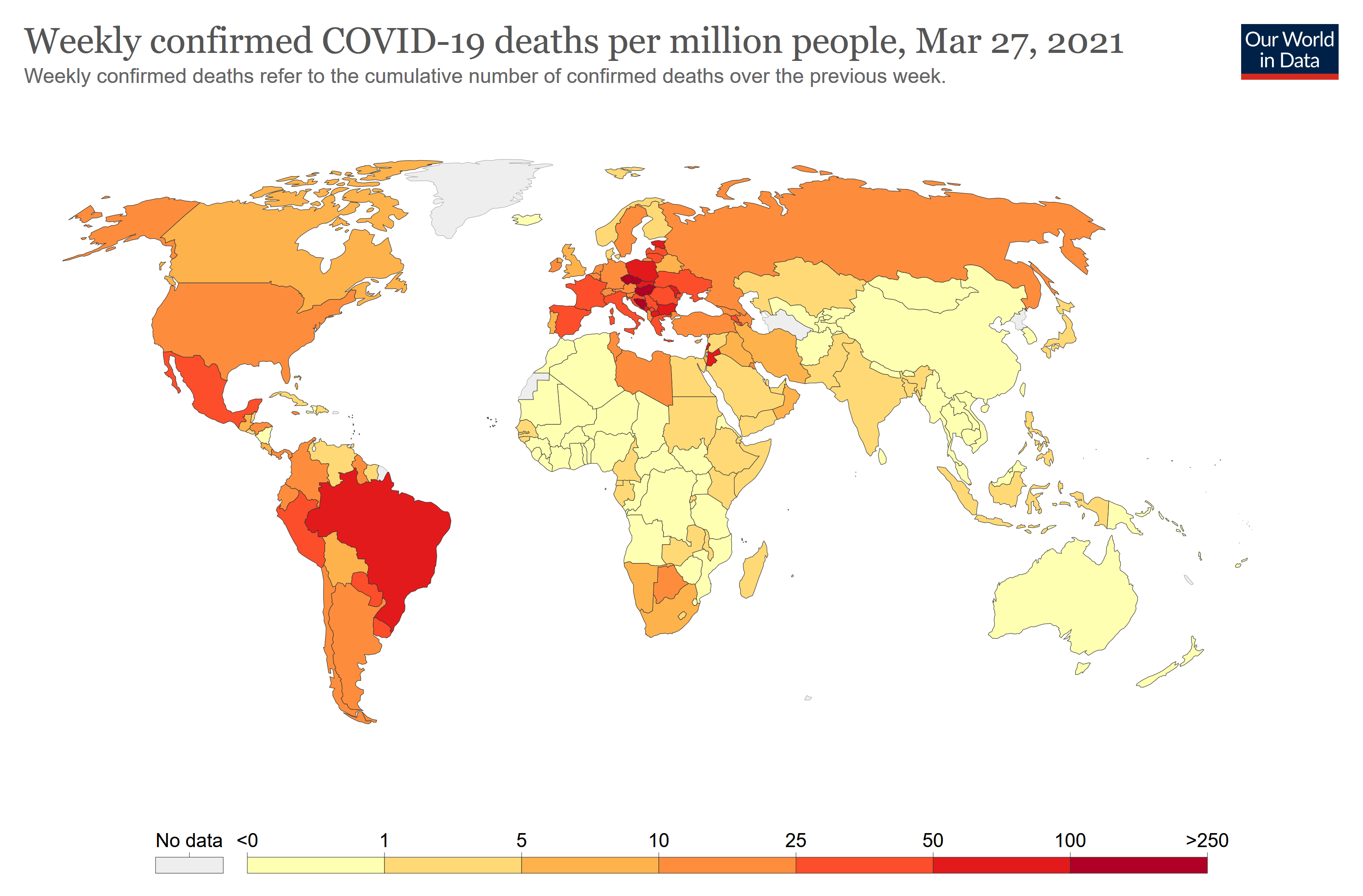
Preview Image: Weekly Deaths per Million


