Lead-acid batteries had become more useful by the early 1880s. Planté had shown that lead could form a rechargeable battery. Faure’s pasted plates offered a faster route to greater capacity. When Henri Tudor introduced practical lead batteries, the world woke up!
Laboratory Success Did Not Always Produce a Winner
Yet one important problem remained. Laboratory success did not automatically produce a battery that could survive reliable everyday use.
Henri Tudor believed that the battery needed stronger plates, and better control of the active material. Rather than simply copying the newest design, he experimented with ways of combining useful features from earlier research.
How Tudor Introduced Practical Lead-Acid Batteries
Tudor developed thick, rigid lead plates with grooves that increased their surface area. He also used a shortened Planté-type forming process before applying Faure’s lead-oxide paste. The grooves helped the paste remain attached, as the battery went through repeated charging and discharging.
This Was a Major Step Toward Practical Mass Production
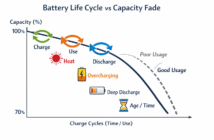
Early pasted plates could suffer from mechanical failure. Active material could loosen from the plate and fall away, reducing capacity and shortening battery life. Tudor’s work illustrates an important stage in battery history.
The challenge was no longer simply to demonstrate that rechargeable electricity storage was possible. Engineers had to make batteries dependable enough for practical applications.
This Bridged The Gap Between Science And Manufacture
Tudor helped bridge the gap between scientific invention and industrial manufacture. He also went on to build batteries for practical electrical systems. These included installations where batteries stored energy from generators, and helped provide a steadier supply.
Lead-Acid Batteries Were Becoming Engineered Products
The lead-acid battery was becoming an engineered product, rather than merely a laboratory experiment. Improvements like Tudor’s helped establish the foundation for the large, reliable batteries that followed.
More Information From Our Battery Blog