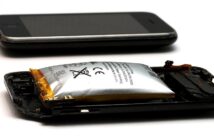
Battery thermal runaway is an incendiary condition, during which battery internal temperature increases uncontrollably. The process begins when the battery generates more heat than it can absorb. A team from two leading universities investigated the relationship between ventilation conditions and thermal runaway.
How Thermal Runaway Evolves Regardless of Ventilation
We first need to understand the sequence of thermal runaway, before we relate this to ventilation conditions:
- The battery temperature increases due to an out-of-specification event.
- That rising temperature causes the event to generate more heat.
- This heat triggers a chemical reaction increasing the battery current.
- The faster flow of charged particles increases battery temperature further.
- This sequence of events keeps auto-repeating, creating a domino effect.
Battery specialists from Zhengzhou University of Light Industry, teamed with colleagues from Stanford, to quantify the relationship between ventilation conditions and thermal runaway.
Controlling Thermal Runaway in Lithium-Ion Battery Packs
The researchers from Stanford and Zhengzhou knew that thermal runaway would be fiercer in confined spaces. This was because there was reduced opportunity to ventilate the heat away.
They decided to focus on lithium-ion battery packs in energy storage cabins, or similar containers. And then investigate the effects of ventilation conditions on temperature propagation, and smoke concentration variations, during thermal runaway in these containments.
The team then observed the effects of different door opening angles and vent positions, on temperature propagation and gas concentration. These were their findings and conclusions:
- Fire intensity and temperature exacerbate with increasing angles, within a certain range of door opening angles.They reach a peak before the effects diminish.
- When the cabin door is opened and the vent position is close to the fire source, the temperature peak rises higher, after the smoke concentration reaches its peak earlier.
The team hopes that their findings will provide guidelines for setting fire detection, and ventilation conditions, for lithium-ion battery packs in storage cabins. And that this in turn, will offer significant theoretical and practical value, for enhancing the safety of these energy-storage containments.
More Information
California’s AB-303 And BESS Battery Storage
Flame Resistant Battery Casings in Transit