Walter Bersey was a British engineer born in 1874 with a particular interest in developing electric-powered vehicles. He also invented a dry storage battery in which the electrolytes were contained in a low-moisture paste. And powered an electric bus that ran successfully for 3,000 miles. But today we focus on the Walter Bersey London electric cab, because it makes for quite an interesting story.
Birth of the Walter Bersey London Electric Cab
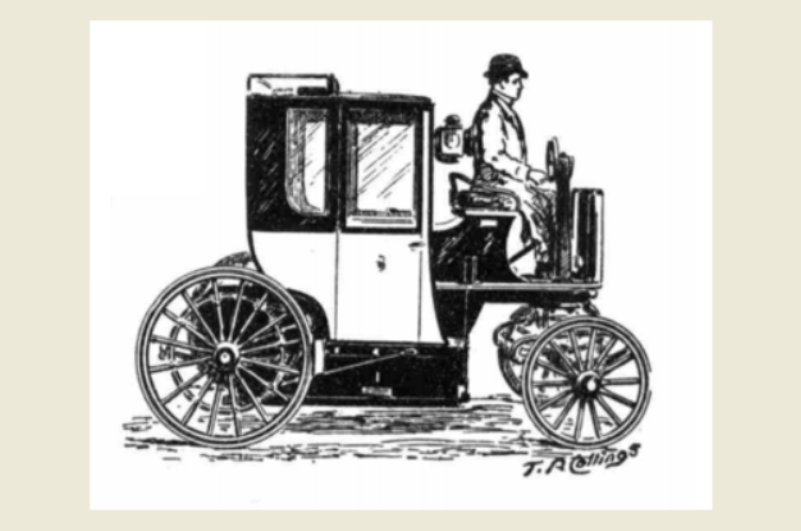
The Walter Bersey London electric cab was the first self-propelled London hail taxi. Folk named them hummingbirds after their whirring motors and bright colors. They could eat up the distance at a respectable speed of twelve miles-per-hour.
A capacity for two passengers, plus driver made them ideal for busy London commuters. The Great Horse Carriage Company completed an initial 12 for the London Electrical Cab Company in 1897. Within a few years there were 75 cabs serving the City of London, each with a driving range of 30 miles.
A bank of 40 grid-plate batteries, probably comprising lead-acid cells fed energy through to a 3.3 horsepower electric motor. The cells weighed 1,568 pounds overall, and boasted a total 170 ampere hour capacity, assuming 30 amp demand. But the carriage-maker suspended them beneath the chassis on springs, because they were fragile.

But This Was Not Good Enough for London
Electric passengers paid the same rate as for horse-drawn cabs, although they delighted in the smoother ride. The manufacturer tested the batteries for robustness on a bespoke ‘shaking machine’ Bersey devised, before installing them.
However alas, the Walter Bersey London electric cab was unable to withstand the hammering it received from London’s cobbled streets. The wheels and tires eventually failed from the weight of the batteries, and their glass plates could not survive the constant vibrations. It was back to the drawing board again.
More Information
The Morrison Four Wheel Electric Carriage