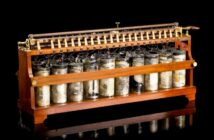
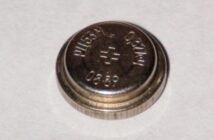
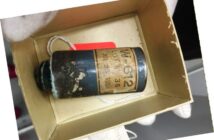
The Morrison four wheel electric carriage was the work of a Scotsman who tinkered with batteries when he was a lad. Later he moved to Des Moines, Iowa when he was 25, where he tinkered with electricity all his life. But batteries were actually his main passion, and so he developed a carriage to demonstrate what they could do.
Birth of the Morrison Four Wheel Electric Carriage
William Morrison became a watchmaker in a Des Moines jeweler’s studio, which was pretty high tech in those pioneering days. However, his dreams came together after dark, when he retired to his ‘cave’ as he called it in a basement. But he also knew his limitations, and so he teamed up with a mechanical engineer.
By 1887, the two young men already had their prototype electrical carriage up and running. Although this was actually a conventional conveyance, with the horses removed and lead batteries, electric drive train, and steering added.
During the two years that followed they tweaked and tweaked, until they had a useful, practical electric carriage. In fact, it was the first one ever built in America that ticked all those boxes. And oh boy it worked well!

William Morrison’s Electric Carriage Goes on Show
The Morrison four wheel electric carriage had its first public outing at the 1890 Seni Om Sed Parade in Des Moines, where there were 85,000 to 100,000 spectators watching. Those unfamiliar words may have been the city name spelled backwards, but the electric carriage certainly gave a glimpse into the future.
Morrison drove his electric vehicle throughout the city in the weeks that followed. The electric motor slung inconspicuously beneath the chassis, while the batteries were in a box under the driver seat. Their lead-acid cells produced 112 amps at 58 volts, weighed a total 768 pounds, and drove a four-horsepower modified electric trolley motor.
A battery switching system allowed Morrison to connect to 8, 12, or 24 batteries, depending on the speed he wished to reach. The maximum driving range was 50 miles, where after Morrison recharged the secondary lead-acid batteries overnight, and was good to go the following morning.
More Information
William Morrison – Part 1 The Battery