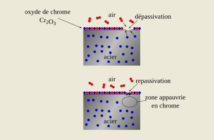
What is battery passivation does it matter? Well, passivation is a thin protective film on the surface of the lithium-metal anode in a lithium thionyl chloride battery.
It is a normal feature of this chemistry/ and helps explain why these cells can retain their energy during long periods of storage.
The Lithium Surface Reacts Slightly With The Electrolyte
The lithium surface reacts slightly with the electrolyte, forming a layer of reaction products, so battery passivation does matter. This film limits further contact between the lithium and the liquid, slowing unwanted reactions that would otherwise consume active material.
Passivation Helps Reduce Self-Discharge
In effect, passivation helps reduce self-discharge and supports long shelf life. But, the same protective layer can create a temporary drawback too. Because the film also resists the movement of charge across the lithium surface, so a cell in storage for a long time may initially show a voltage drop when a load connects.
This causes ‘voltage delay’. As current flows, the film’s electrical resistance can decrease, allowing the cell voltage to recover. The extent of the effect depends on storage time, temperature, cell construction, and the size and duration of the current demand.
This Matters In Devices That Need a Strong Current Pulse
This matters in devices that need a strong current pulse immediately – for example, a radio transmitter, a wireless alarm, or a sensor that sends data in bursts. A battery may have plenty of remaining energy, yet briefly fail to provide the voltage the device needs at start-up.
Engineers can reduce the risk by choosing a cell for pulse loads. This limits peak current, using suitable capacitors or other pulse-support measures, and testing the design after realistic storage periods.
Passivation Should Not Be Confused With a Defect
Passivation should not be confused with a defect or with the battery being empty. It is part of the chemistry, although the resulting voltage delay must be allowed for in the application.
Users should not try to remove the film by opening, shorting, heating, or otherwise experimenting with the cell. They should follow the manufacturer’s instructions and replace a battery if its measured performance falls outside the equipment requirements. Proper circuit design is the safe way to manage passivation.
More Information