We find it amazing how some brilliant ideas take centuries to catch on while others, like SpaceX recyclable rockets, start soaring shortly. Would you believe William Robert Grove’s fuel cells first saw the light of day in 1842? And we still have not gotten around to commercializing his brilliance. Those certainly were exciting days when the researchers had no engineering qualifications, and they worked out of kitchens!
The Early Beginnings of William Robert Grove
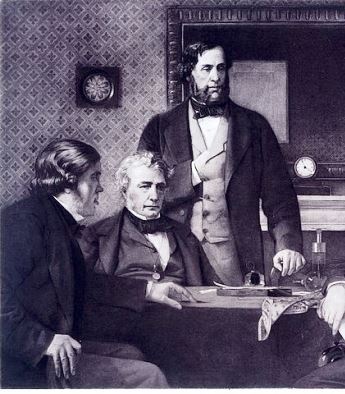
William was the only child of Welsh magistrate John Grove, and his wife Anne née Bevan. Good schools did not exist, and so private tutors prepared him to study classics at university. In case you are not sure, ‘classics’ excludes technology and science.
To work around the problem, William joined the Royal Institution. This had as a goal ‘diffusing the knowledge, and facilitating the general introduction, of useful mechanical inventions and improvements.”
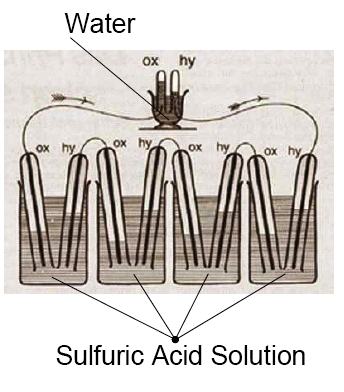
It must have done its job well. After William became an attorney in 1835, something caused him to divert his attention into electricity. We still remember him for inventing the Grove Cell ‘battery’ in 1839. Moreover, he also invented the first incandescent light bulb. Thomas Edison merely improved his design. But, William Robert Grove’s fuel cells were still waiting in the wings.
How William Robert Grove’s Fuel Cells Happened
The short story is, it was a coincidence. William wanted to prove that steam could be broken up into its constituents, hydrogen and oxygen. By being able to reverse the process, he confirmed that molecules were capable of disassociation into their constituent atoms.
However, Grove’s interests were merely qualitative. His curiosity satisfied, he drifted back to the legal profession in 1846.
Before William Grove finally moved on from science, he collaborated with colleagues developing daguerreotype photography. In doing so, he observed, “It would be vain to attempt specifically to predict what may be the effect of photography on future generations. A process by which the most transient actions are rendered permanent.” We could say the same of batteries and William Robert Grove’s fuel cells.
Related
Fuel Cells 101: An Introduction to the Basics
Make Your Own Hydrogen Fuel Cell
Preview Image: William Robert Grove