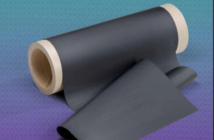
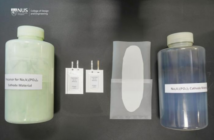
In May 2014, the American Chemical Society published an article entitled “Flexible Three-Dimensional Nanoporous Metal-Based Energy Devices”. The research lead by James Tour from Rice University in Texas, highlights a new inorganic material used in thin film rechargeable batteries – the Nickel Flouride (NiF2). What makes this different from the existing materials used in thin film batteries is that it has better supercapacitive performance, higher energy and power densities, and demonstrates higher degree of flexibility and cyclability.
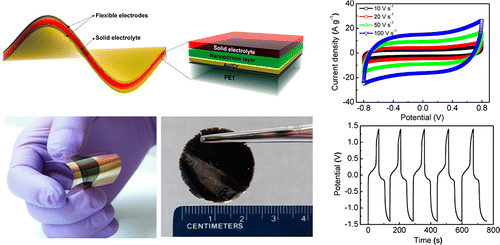
Experimental Results using NiF2
Image Source: ACS Publications Website
In this post, we will investigate the properties of this recently discovered energy device and understand its implications for the future of bendable electronics.
Properties of Conventional Energy Storage Devices
From the recent post What is A Supercapacitor, we know that a supercapacitor is a storage device that bridges the gap between conventional capacitors and rechargeable batteries and it has the following properties:
- Charge and Discharge Rate – faster than a regular battery
- Electrode Designs – based on carbon, polymer, and asymmetric
- Energy Density (energy per unit volume or mass) – higher than conventional batteries
NiF2 far exceeded these properties of a supercapacitor. On top of that, NiF2 is a nanoporous (feature of energy device which allows easy flow of ions) material with greater flexibility than the materials used as components in existing thin-film batteries such as polymers and carbon nanotubes (CNT) are rigid or inflexible.
Technology in Thin Film Batteries
Thin film rechargeable lithium-ion batteries have been there for years. They are similar to conventional Li-On batteries except that they are thinner, lighter, have longer life cycle and better energy density. The recent findings suggest that the use of NiF2 will further improve the overall performance of thin film batteries.
The research shows that this newly developed energy device is “far thinner than paper, can flex and bend, and store enough energy”. Moreover, it was pointed out that “manufacturers could easily scale up the process for mass production”. This means that the NiF2-based energy device, packed with a lot of power, is very soon to energize our portable electronic devices such as mobile phones, laptops, and even medical devices. The solution to the incapacities of existing rechargeable thin film batteries has just been unveiled!
Related articles: