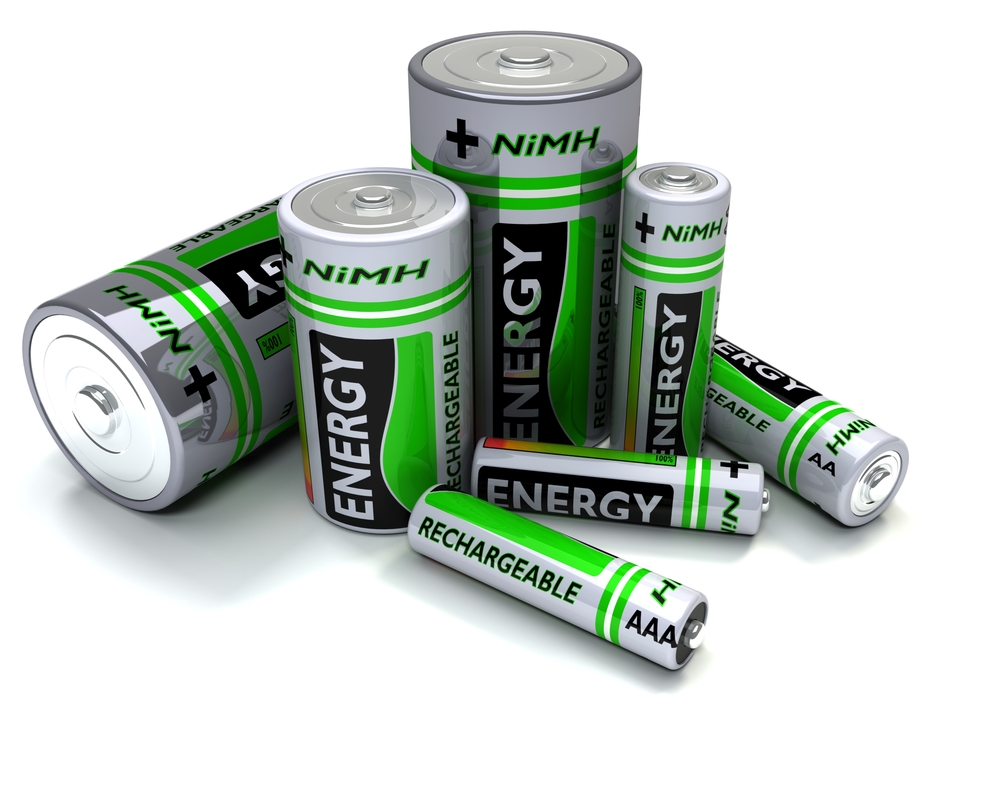
The Nickel Metal Hydride (Ni-MH) is a type of rechargeable battery commonly used in portable devices such as cameras, GPS units and MP3 players. It is also used in hybrid vehicles like the Toyota Prius.
The Ni-MH was first introduced into the market in 1989. It evolved from the nickel-hydrogen battery. The nickel-hydrogen battery is expensive and bulky, but it has high energy density and lasts a long time. For these reasons, the nickel-hydrogen battery is used to power satellites. In a quest to store the hydrogen in a more convenient manner, Stanford Ovshinsky found a solution by creating metal-hydride alloys.
The Ni-MH battery is an alkaline battery since it uses potassium hydroxide (KOH) as electrolyte. It is composed of metal compounds or metallic oxides which are stable and good conductors. In its positive electrode, it has nickel hydroxide (NiOOH). It has hydrogen storing metal alloy (MH) in the negative electrode. During the charge and discharge reaction, the nickel hydroxide only exchanges a single electron. Moreover, the electron transfer is very rapid which results in high power capacity.
Since its release, the Ni-MH became the battery of choice for most portable devices. Compared to the largely outdated nickel-cadmium battery, the Ni-MH has higher energy density per volume and weight.
However, the Ni-MH battery has its own downside. It is known to be sensitive to high temperature. This sensitivity to temperature results in a shorter life span.
Related articles:
What is a Nickel Cadmium Battery?
What is a Sodium Sulfur Battery?