Fluorine is the lightest halogen gas and the most electro-negative element we know. It is also extremely reactive with almost all other elements. Several attempts to separate it in the mid 1800’s led to serious and even fatal accidents. Then French chemist Henri Moissan succeeded with low-temperature electrolysis in 1886, which remains the current practice. Some time ago, Argonne researchers wondered, will fluorine improve lithium battery life?
Will Fluorine Do That? A Long Shot that Paid Off

Researchers at University of Maryland, U.S. Army Research, and Argonne National Laboratories achieved a breakthrough. When they announced an electric car battery with enhanced electrodes stabilized with highly-fluorinated electrolyte.
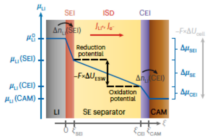
“We have created a fluorine-based electrolyte to enable a lithium-metal anode, which is known to be notoriously unstable. And furthermore demonstrated a battery that lasts up to a thousand cycles with high capacity,” post-doctoral researchers say. The key is a high-fluorine concentration in the solid electrolyte interphase (SEI) on the negative electrode.
Perhaps Controversial in Literature But It Works
If you had asked, will fluorine be any use in lithium battery development you would have had a mixed response. Until now that is, because the team discovered the secret lies in in the chemical arrangement and distribution.
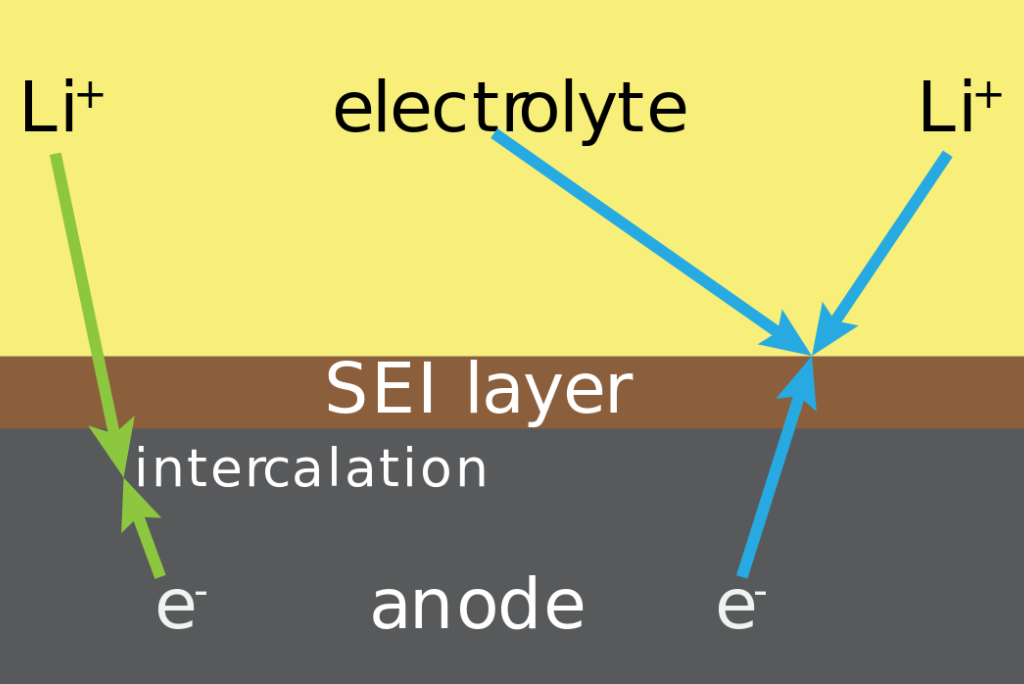
Current lithium electric car batteries have aggressive materials in the anode and the cathode that make other elements unusable. However, in the case of the new development, they remain usable for longer. Since after 1,000 charges, the new fluorine enhanced electrolytes ensured 93 percent of battery capacity.
“The aim of the research was to overcome the capacity limitation that lithium-ion batteries experience,” Professor Chunsheng Wang explains. “We identified that fluorine is the key ingredient that ensures these aggressive chemistries behave reversibly to yield long battery life.
Moreover, an additional merit of fluorine is it makes the usually combustible electrolytes completely unable to catch on fire.” Is this the new star we have been waiting for? Will fluorine make the difference?
Related
The SEI Layer Inside Lithium Batteries Explained
Lithium Battery Aging Explained
Preview Image: Simplified Structure of the Fluorine Atom